
Pincher's Creek Feminised
Buy Pincher's Creek Feminised seeds in South Africa. Sativa · 23% THC · euphoric, focused, uplifted. Every figure on this page is sourced, and every order ships unbranded.
Royal King Genetics — Seed-Lot Testing
Figures below come from our own seed-lot testing rather than breeder marketing, taken from a single batch tested 2026-09-18 on 275 seeds.
About Pincher's Creek Feminised
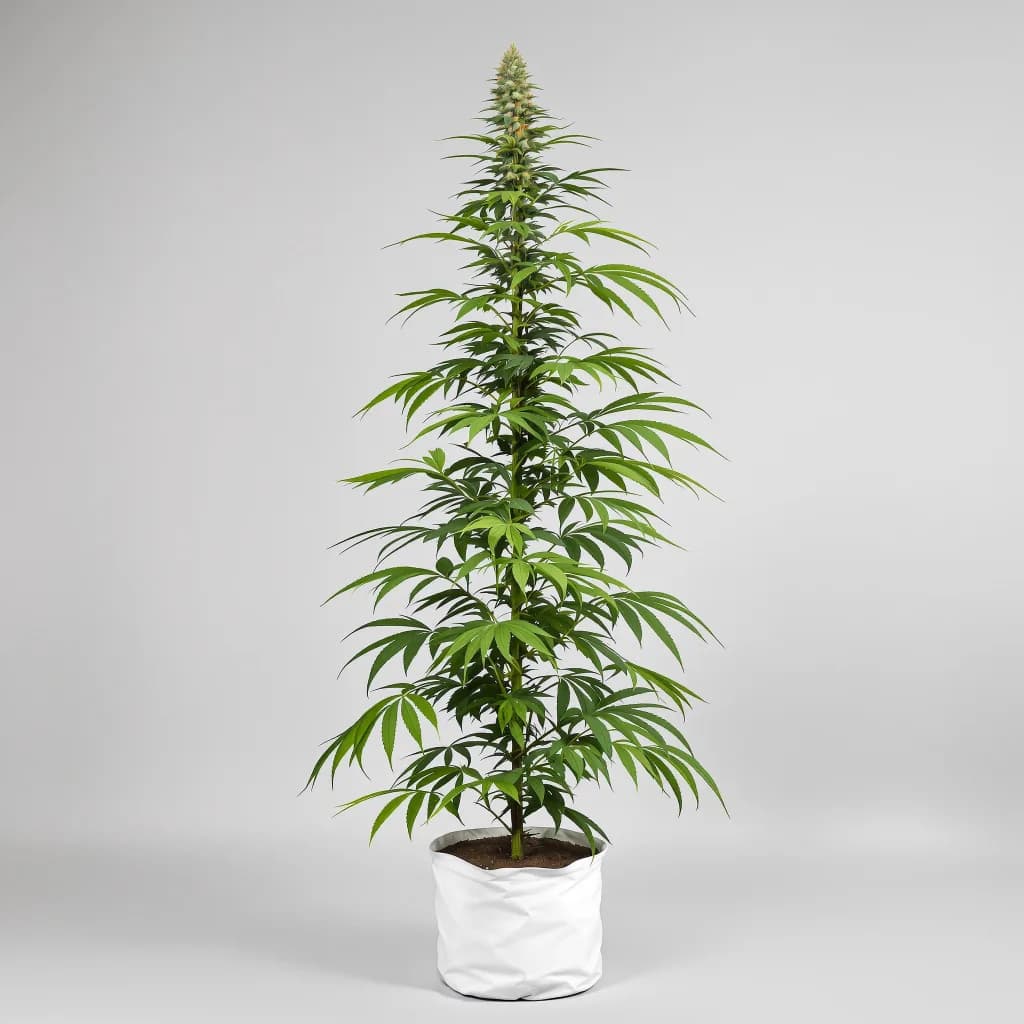
Days 1 to 14, seed to fourth node: Expect Pincher's Creek to crack in roughly 48 hours on damp paper towel and to break soil by day three. Early growth runs upward quickly, narrow first leaves already reaching. Look for five nodes by day 14 with obvious gaps between them, which is the sativa pattern showing early. Damping off is rare if you hold near 70% humidity through this stage.
Weeks 3 to 6, building the frame: This is the point where it tries to get away from you. Start low-stress training in week three, bend the main stem over at 90 degrees in week four, and the secondaries will draw level for a flat canopy by week six without topping at all.
Bloom, weeks 1 to 79: The 30/70 character becomes obvious here. Limonene usually shows in week three and strengthens from there, with trichome cover visible without a loupe from about week five. Indoor yield: 375–525 g/m². Height: 90–180 cm. Tested at 23% THC. Difficulty: intermediate.
The Aromatic Three
Leading with Limonene, then Terpinolene, and Pinene underneath.
Difficulty: intermediate. In flower for 7–9 weeks. Stands 90–180 cm. Indoors it returns 375–525 g/m². Outdoors, 450–650 g/plant a plant.
Effects
Reach For It When
Strain Type
At a Glance
In the Packet
Feminised Premium
Seeds
the source
inside
number
Related Strains
Bianca Feminised
Bianca Feminised for South African growers — sativa genetics at 20% THC, reported as euphoric, creative, uplifted. Sourced grow figures on the page, plain packaging, delivered nationwide.

Blue Cinex Feminised
Buy Blue Cinex Feminised seeds in South Africa. Sativa · 22% THC · euphoric, creative, focused. Every figure on this page is sourced, and every order ships unbranded.

Rainbow Feminised
Rainbow Feminised for South African growers — sativa genetics at 20% THC, reported as euphoric, happy, uplifted. Sourced grow figures on the page, plain packaging, delivered nationwide.

OG Chem Feminised
OG Chem Feminised for South African growers — sativa genetics at 20% THC, reported as euphoric, happy, uplifted. Sourced grow figures on the page, plain packaging, delivered nationwide.
Pincher's Creek Feminised — Breeder Information
Royal King GeneticsRecreated and stabilised by Royal King Genetics, the breeding team behind this catalogue. Seed lots are germination-tested before they ship. More on the breeding process and about page.
The Pincher's Creek hybrid sits in the middle of the modern dispensary lineage. Two backcross rounds layered on top of the original cross have locked long-flowering uniformity and finish-time uniformity across the pack.
Stabilise the Pincher's Creek cross into a seed-uniform line.
Chosen for sativa vigour, bud-to-leaf ratio and the distinctive terpene character of the original cut.
Royal King Genetics breeding facility — pollen from internally selected sibling males of the recurrent parent.