Do-Si-Dos Strain: How It Behaves in South African Conditions
Royal King Seeds Editorial Team
Cultivation and editorial team, Royal King Seeds South Africa
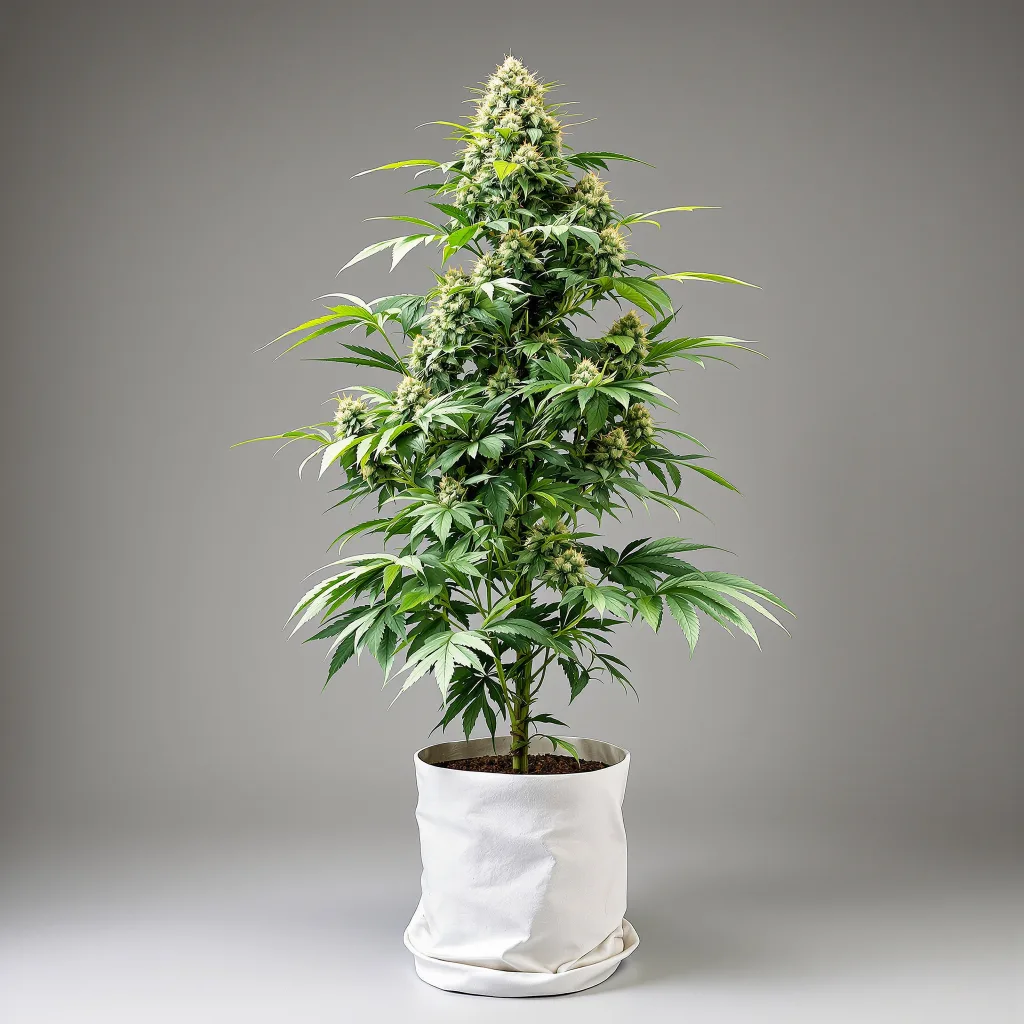
Do-Si-Dos is a good outdoor choice in the Western Cape, the Northern Cape and the drier parts of the Highveld, and a poor one on the KwaZulu-Natal coast or the Garden Route unless you can put a roof over it. The reason is structure, not potency. Do-Si-Dos builds short, fist-hard colas with very little internal airflow, and dense flowers are exactly what a humid autumn attacks.
Where flowering lands in dry air — Cape summer, Karoo summer, a frost-bracketed Highveld April — that density is an asset and the plant finishes heavy. Where overnight humidity sits high through March and April, it is a liability you pay for in cut-out rot.
Everything below assumes an outdoor photoperiod plant from a September to November planting, or an indoor run under lights. Autoflowering Do-Si-Dos changes the calendar entirely and is dealt with separately further down.
What Do-Si-Dos is, and what the lineage predicts
Do-Si-Dos came out of the American Cookies scene as a cross of OGKB — a notoriously slow, stunted, leathery-leaved phenotype of Girl Scout Cookies — with Face Off OG, a dense, resin-heavy OG Kush line. It is indica-dominant in both structure and reported effect, usually described by growers as sweet and earthy with a sharp floral edge, and as producing a heavy, physically relaxing effect. Those are reported characteristics of the cultivar, not outcomes we can promise you.
For a grower, the lineage predicts four things reliably. Short internodes, so flowers stack into solid blocks rather than spaced-out spears. Thick resin coverage, which traps moisture against the bud surface. Chunky, wide leaves that shade the interior of the plant. And the Cookies-family appetite for calcium and magnesium, which turns into visible leaf damage fast under the ultraviolet intensity of the Highveld.
Density is the whole South African argument
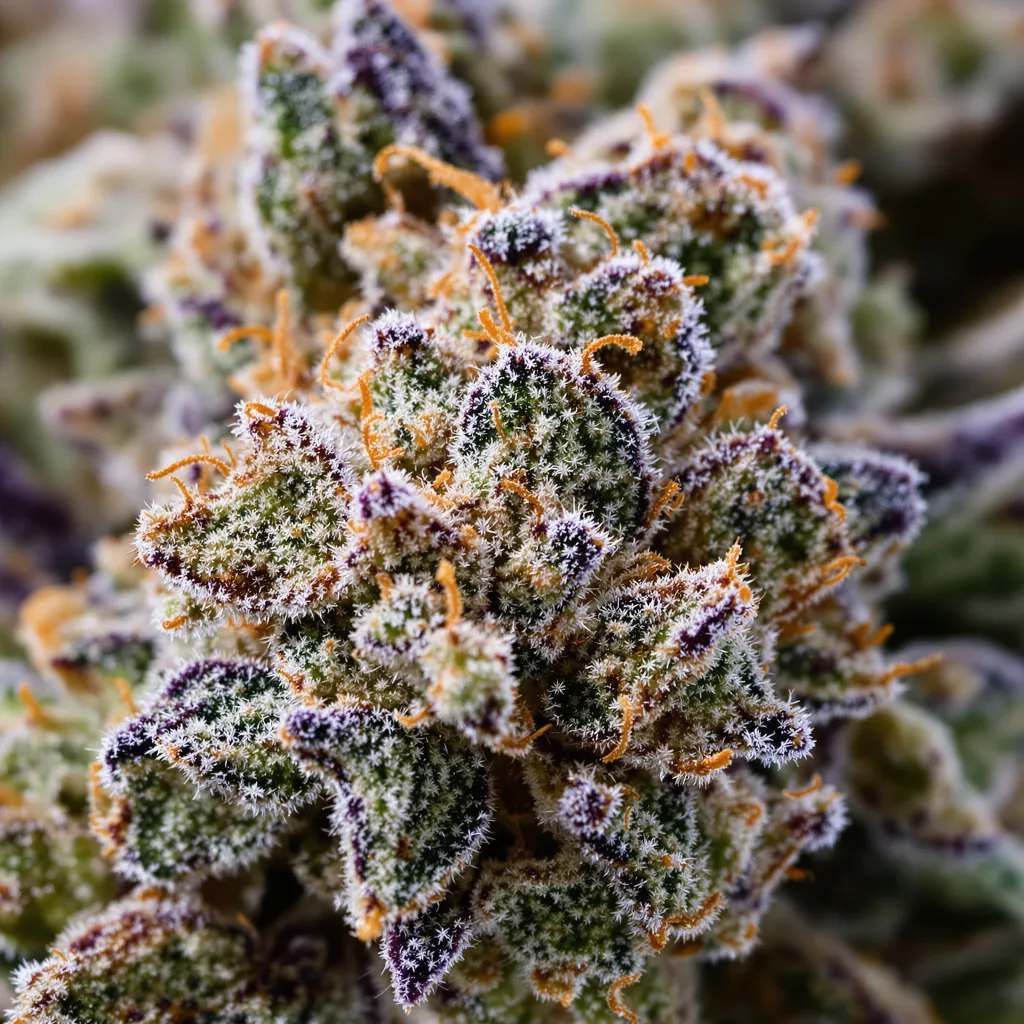
Bud density decides where this cultivar belongs. A Do-Si-Dos cola at week seven of flower has almost no air moving through its core. If the surrounding air sits above roughly 65 to 70 per cent relative humidity overnight, and the bud never fully dries between dawn and mid-morning, botrytis — grey mould, the fungus that hollows a cola out from the inside — has everything it needs.
That is why the same plant behaves like two different cultivars depending on province. In Cape Town or Upington, the flowering weeks happen in dry, bright air and the density simply means more weight per branch. In Durban or Knysna, the same density is a sealed wet pocket. If you are weighing this plant against the cultivars that actually finish outdoors here, density is the first column to look at, ahead of yield figures.
How the season runs, province by province
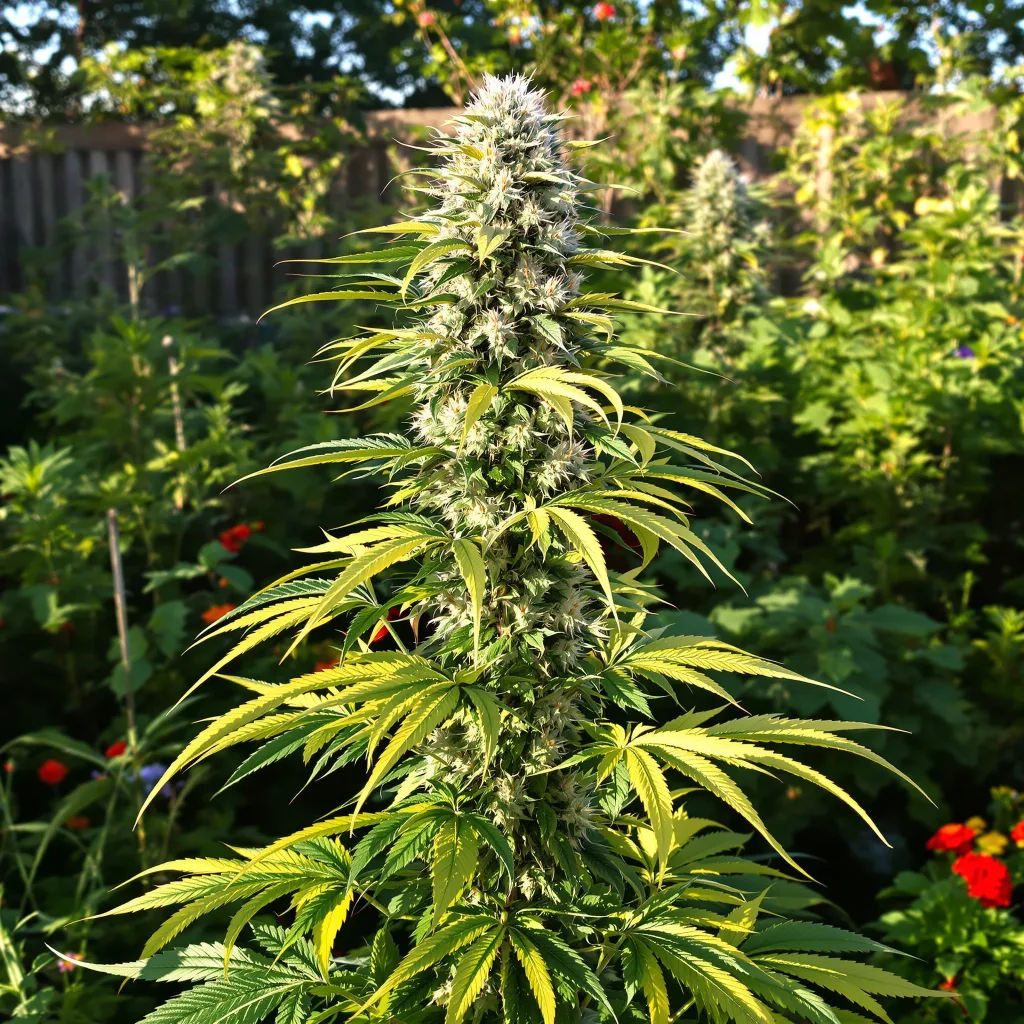
Western Cape. The best fit in the country. Plant out from September into October once the winter rain has eased, and expect to harvest March into April. Flowering lands in the dry half of the Mediterranean year, so the mould pressure that rules out Do-Si-Dos elsewhere barely applies. The real problem is wind: the south-easter runs hard through summer across the Peninsula and the Boland, and heavy colas on Cookies-line branches snap. Stake early, top to spread the canopy wide and low rather than tall, and tie main branches before they load up.
Northern Cape and the Karoo. Plant September to October, harvest March to April. Mould risk is close to nil. Water and heat are the constraints — nothing finishes here without irrigation, and sustained afternoons above the mid-thirties will stall a plant and cook off terpenes. Shade cloth over the hottest hours and mulch over the root zone do more for a Karoo Do-Si-Dos than any feeding schedule.
Highveld — Gauteng, Free State, North West. Workable, with a deadline. Plant out in October after the last frost, and expect to harvest late March into April before the first frost arrives. Do-Si-Dos is short-flowering enough to fit that window, which is the main reason it suits the Highveld better than any long-flowering sativa. Two local risks: summer thunderstorms from November to March, with hail that will shred an open-air plant in minutes, and the heavy dew that follows a storm sitting in those tight colas. A plant against a north-facing wall, where morning sun hits it early, dries faster than one in the middle of a lawn. The cold autumn nights at 1 200 to 1 800 metres also tend to bring deep purple colouring out in this cultivar, which is a cosmetic bonus rather than a quality signal.
Lowveld — Limpopo and Mpumalanga. Plant September to November, harvest April to May. The longest usable inland season, but midsummer heat stress and humidity through the flowering weeks both work against a dense indica. Airflow and shade matter more than feeding. The Mpumalanga escarpment is cooler and considerably wetter than the plains below it — up there, treat Do-Si-Dos as a covered-growing plant.
KwaZulu-Natal and the subtropical coast. This is the one to avoid outdoors. Warm, humid, summer-rainfall conditions with high overnight humidity through the whole flowering period are the worst possible match for a cultivar built like this. The local landrace genetics are open and airy for a reason. If you want Do-Si-Dos in KZN, grow it in a greenhouse with real extraction, or grow it under lights where you control the humidity.
Eastern Cape and the Garden Route. Depends which side you are on. Inland and towards the west, where the rain is winter-dominant and summers dry out, Do-Si-Dos behaves much as it does in the Western Cape. On the Garden Route coast, where rain falls throughout the year and there is no dry season to aim at, outdoor density is a gamble. Covered growing removes most of that uncertainty.
Feeding, training and the mistakes that cost the crop
Do-Si-Dos is not a heavy feeder in the nitrogen sense, and pushing nitrogen into the stretch produces soft, dark, floppy growth that holds water. What it does want is calcium and magnesium, particularly outdoors on the Highveld where ultraviolet intensity drives demand up. Rusty brown spotting on fan leaves from mid-flower is the usual tell. Plants in coco or in light potting mixes show it sooner than plants in amended soil.
Three practical habits make the difference here:
- Train wide, not tall. Topping once in the vegetative stage and tying branches outward gives you several medium colas instead of one enormous one, and medium colas dry out after rain. Expect roughly 1 to 1,8 metres outdoors depending on pot size and planting date.
- Lollipop the bottom third. Strip the lower growth that never sees light. It yields popcorn buds that rot first and seed the rest of the plant.
- Check the cola interiors from week six. Squeeze gently. A soft spot, a single bleached leaf poking out of a bud, or a stem that gives — cut that branch out immediately and do not compost it near the plants.
Do-Si-Dos against two cultivars you are probably also weighing up
| Characteristic | Do-Si-Dos | Gelato | Durban Poison |
|---|---|---|---|
| Bud structure | Very dense, tight blocky colas | Dense, slightly more spaced | Open, airy, spear-shaped |
| Flowering length | Short, roughly 8 to 9 weeks indoors | Short to medium | Medium, sativa-leaning |
| Mould exposure in a humid autumn | High | High | Low |
| Best outdoor fit | Western Cape, Northern Cape, drier Highveld | Western Cape, Northern Cape | Almost anywhere, including the KZN coast |
| Height outdoors | Compact to medium | Compact to medium | Tall, stretchy |
| Main local risk | Rot in the cola core; Cape wind snapping branches | Rot in the cola core | Height and visibility; late finish in cold provinces |
The honest summary of that table: if your flowering weeks are damp, Durban Poison genetics survive conditions that destroy Do-Si-Dos. If your flowering weeks are dry, Do-Si-Dos puts more weight on the same branch space.
Indoors, and the autoflower alternative
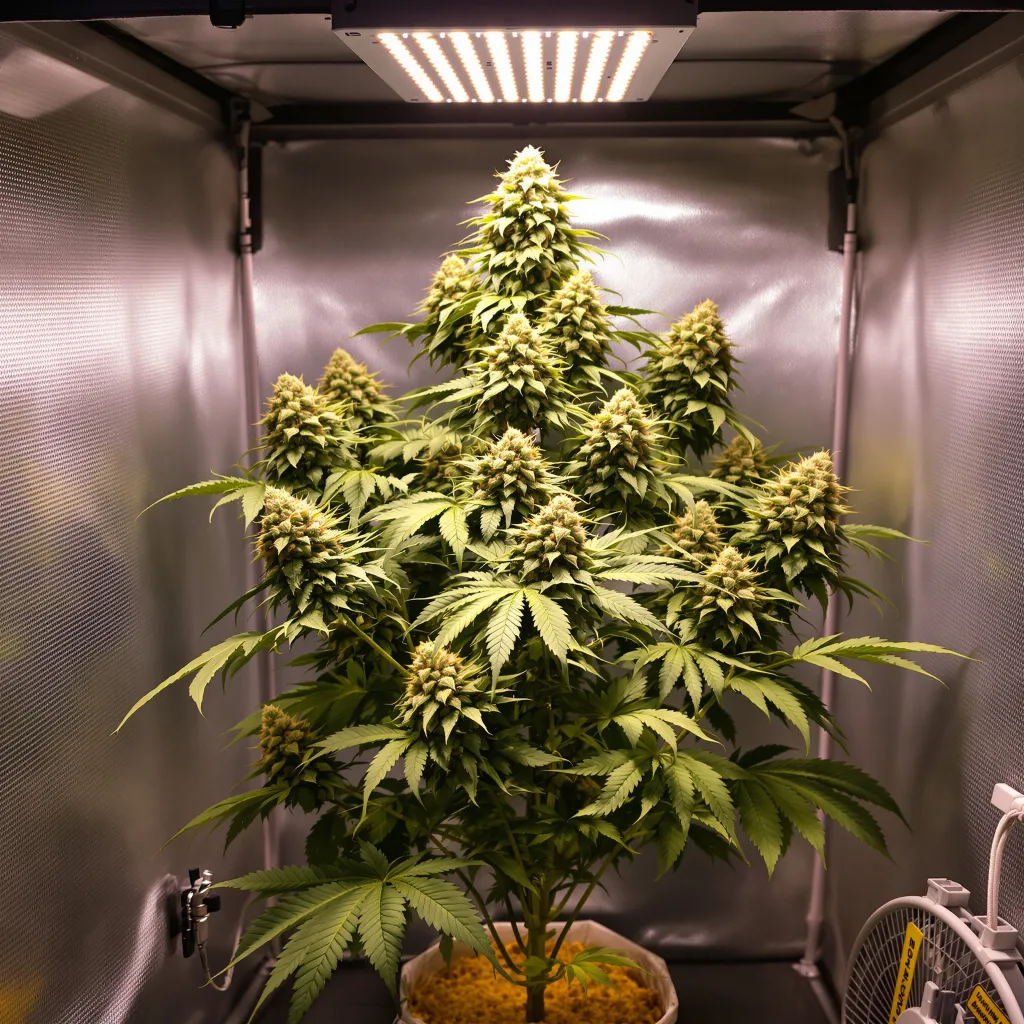
Indoors, Do-Si-Dos is straightforward: compact, short-flowering and well suited to a tent where humidity can be held down through late flower. Growers commonly report yields in the region of 400 to 500 g/m² in a well-run room, though that number depends far more on light intensity, pot size and training than on the cultivar. Keep humidity low from week five and keep air moving under the canopy, because the density problem does not disappear indoors — it is just controllable there.
Do-Si-Dos Auto solves a different problem. An autoflowering plant runs on age rather than daylength, so it finishes roughly two to three months from sprouting regardless of the month. On the Highveld that means you can plant in October and take a crop down in January, well clear of the April frost deadline, then run a second. In the summer-rainfall provinces it lets you aim the flowering weeks at a drier stretch rather than accepting whatever March gives you. The trade-off is a smaller plant and no opportunity to extend the vegetative stage. If you want full size and full yield from one plant and your autumn is dry, the feminised photoperiod version is the stronger choice.
Who should not grow Do-Si-Dos
Skip this cultivar if you are growing outdoors and uncovered on the KwaZulu-Natal coast, on the Garden Route, or anywhere your autumn nights sit damp — the density will beat you regardless of how carefully you feed. Skip it if you cannot inspect the plant every few days through flower, because rot caught in week eight is a lost crop and rot caught in week six is a lost branch. Skip it too if you are growing in a windy Cape garden and have no intention of staking, since unsupported Do-Si-Dos branches snap under their own flower weight in a hard south-easter.
It suits a grower with a dry flowering window, a bit of patience with calcium and magnesium, and a preference for compact plants that do not advertise themselves over a wall.
If your conditions match the Western Cape, Northern Cape or drier Highveld description above, plant Do-Si-Dos Feminised out in October and work backwards from your local first-frost date. If your autumn is humid, use the strain finder to shortlist something open-structured instead — that one change does more for your harvest than any amount of care given to the wrong plant.
Common questions
When do you harvest Do-Si-Dos outdoors in South Africa?
From a September to November planting, most South African growers take Do-Si-Dos down between March and May. Expect March to April in the Western Cape, Northern Cape and Eastern Cape, late March to April on the Highveld where the first frost sets the deadline, and April to May in the Limpopo and Mpumalanga lowveld. Overseas guides giving September and October harvest dates are written for the Northern Hemisphere and are six months out for South Africa.
Does Do-Si-Dos handle humidity?
Poorly. Do-Si-Dos produces very dense, resin-coated colas with almost no internal airflow, which is the structure most vulnerable to botrytis when overnight humidity stays high through flowering. On the KwaZulu-Natal coast and the Garden Route that means outdoor growing is a real gamble unless the plants are covered and ventilated. In the Western Cape, Northern Cape and drier Highveld, where the flowering weeks are dry, the same density is an advantage.
Is Do-Si-Dos suitable for a first grow?
It can be, in a dry region. The plant is compact, short-flowering and does not need an aggressive feeding schedule. What it does need is someone who will check inside the colas from mid-flower and who will stake branches before they bend. A beginner in a humid coastal area would have an easier time with an open-structured cultivar, or with an autoflowering plant timed to finish outside the wettest weeks.
How tall does Do-Si-Dos get outdoors here?
Usually somewhere between 1 and 1,8 metres outdoors, though the figure varies widely with planting date, container size and whether you top it. Planted into the ground in September in the lowveld it will run taller than the same seed in a 30-litre pot planted in October on the Highveld. Topping once and training branches outward keeps it low and spreads the weight, which also helps it dry after summer storms.
What is the legal position on growing cannabis in South Africa?
On 18 September 2018 the Constitutional Court, in Minister of Justice and Constitutional Development v Prince, decriminalised the use, possession and cultivation of cannabis by an adult in private. The Cannabis for Private Purposes Act 7 of 2024 was signed into law on 28 May 2024 to give legislative effect to that judgment, and different sections commence on dates fixed by the President, so not every provision is necessarily in force at the time of reading. The Act concerns private adult use and cultivation: commercial dealing in cannabis remains an offence, and the judgment did not legalise trade. Nothing in either the judgment or the Act permits use by a person under 18, or use in public. This is general information and not legal advice — read the Act itself and consult a qualified professional about your own position.
Related Articles
Grandaddy Purple Strain in South African Conditions: Density, Colour and the Autumn Risk
Strain ProfilesGrape Ape Strain: How It Behaves in South African Conditions
Strain ProfilesTart Pops Strain: How It Behaves in South African Conditions
Strain ProfilesBiscotti Strain: How It Behaves in South African Conditions
Ready to Start Growing?
Browse 1,677 cannabis seed varieties with discreet shipping to addresses in all nine provinces and our sourced grow figures.
Shop Cannabis Seeds