Grape Ape Strain: How It Behaves in South African Conditions
Royal King Seeds Editorial Team
Cultivation and editorial team, Royal King Seeds South Africa
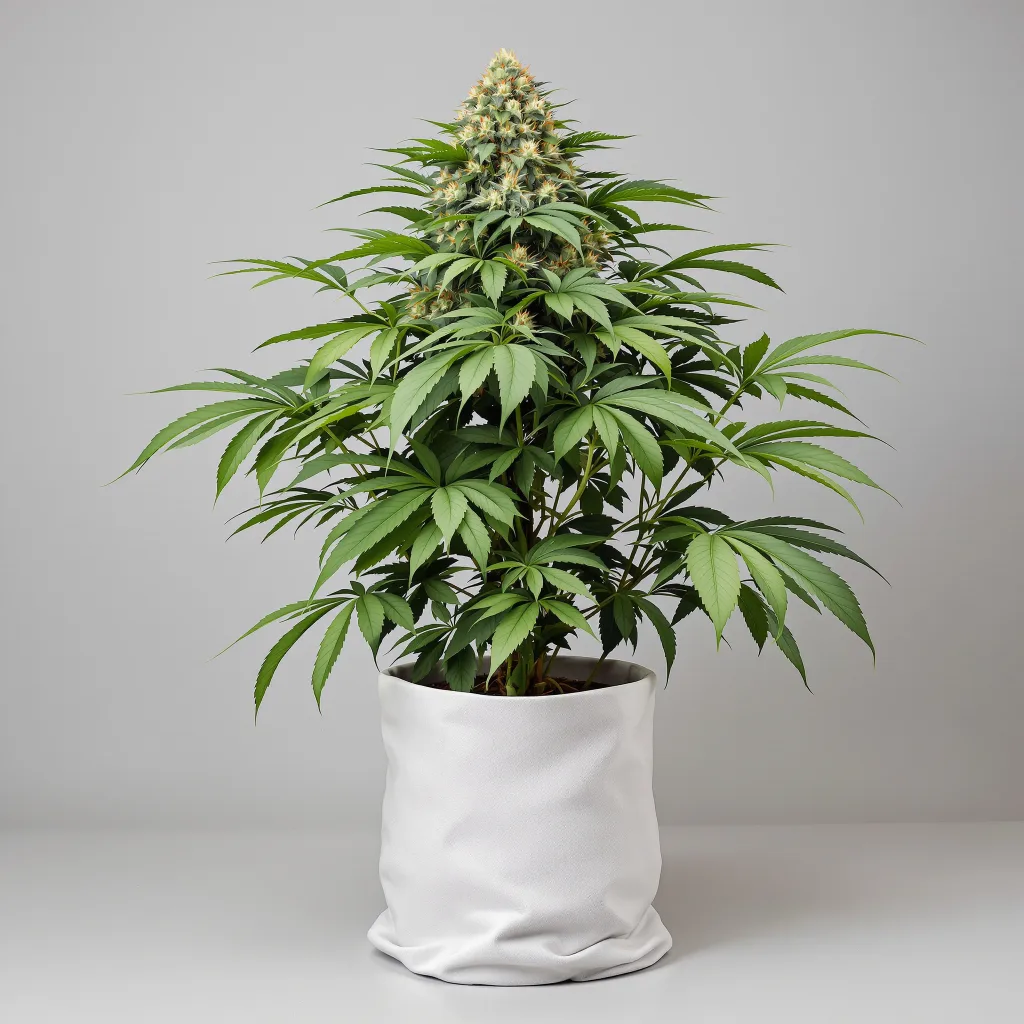
Grape Ape is a short, broad-leaved, heavily indica-leaning cultivar that packs dense, compact flowers onto a squat frame. In South Africa that structure draws a hard line down the map. In the Western Cape and the Northern Cape, where flowering happens in dry air, Grape Ape is a genuinely good outdoor choice — short enough to hide, quick enough to finish by March or April, and colourful in cool autumn nights. On the KwaZulu-Natal coast and through the humid Lowveld flowering weeks, the same dense bud structure is a liability, and botrytis — grey bud rot — will find the core of those flowers before you do. That is the whole decision in one paragraph. Everything below explains the margins.
What Grape Ape is and where it came from
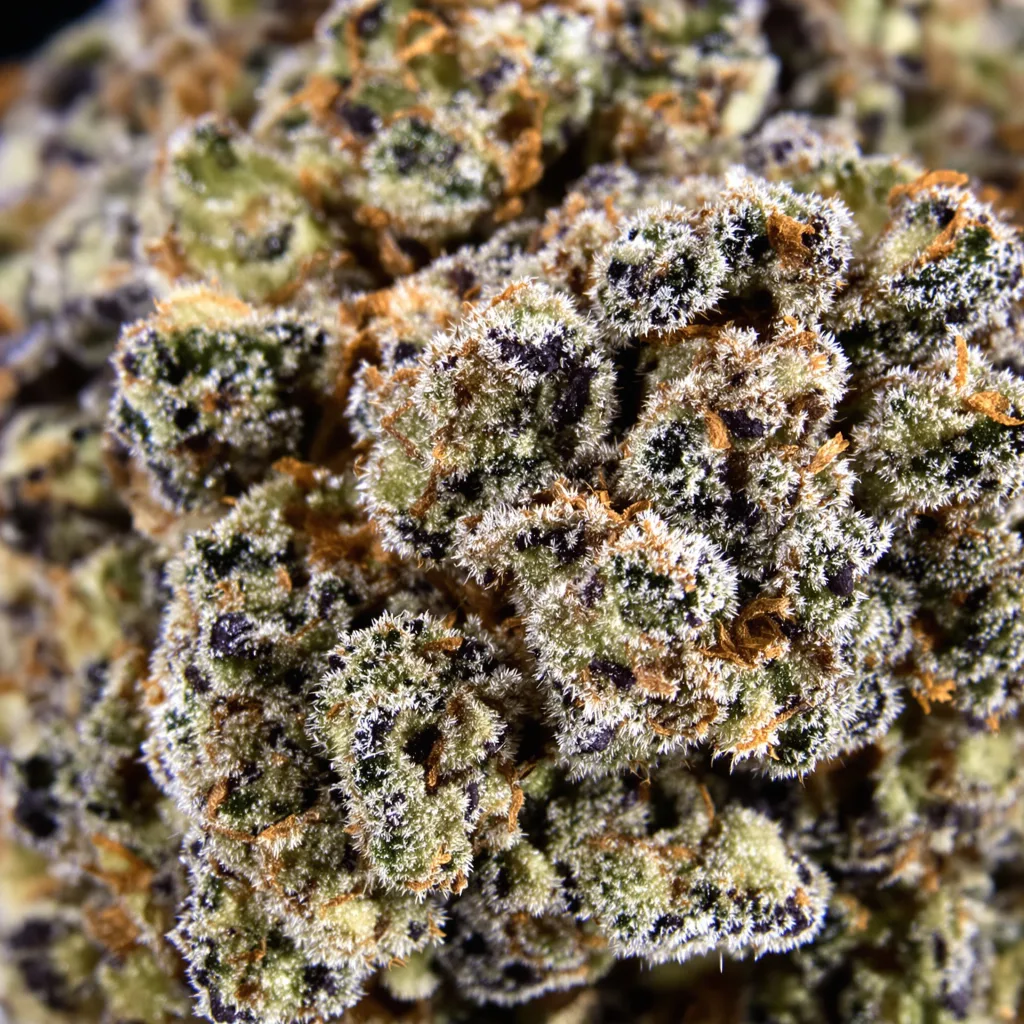
Grape Ape descends from a Mendocino Purps, Skunk and Afghani lineage. The Afghani side supplies the short internodes — the gaps between branch nodes — and the thick, resin-loaded calyx stacking; Mendocino Purps supplies the anthocyanin expression that turns leaves and bracts purple when night temperatures drop. The grape name refers to the sweet, musky, fruit-skin aroma most phenotypes throw, not to any grape ancestry.
Reported effects are strongly body-weighted and sedating, which is what you would expect from a broad-leaf indica of this lineage. That is a characteristic growers describe, not a claim about treatment or health outcomes.
Practically, what you buy when you buy Grape Ape feminised seeds is a plant that stays low, finishes relatively early, and produces very dense flowers. Those three traits drive every decision that follows.
Structure, height and flowering time
Grape Ape is squat. Outdoors in good ground it commonly sits between 1 and 1,8 metres, which is short for a South African outdoor season where sativa-leaning plants routinely pass 2,5 metres. Indoors under a reasonable light it typically stays under a metre without any training at all.
Flowering runs roughly eight to nine weeks indoors from the switch to 12 hours of darkness. Outdoors in South Africa that translates to a plant that is ready earlier than most — late March into April across most of the country, rather than May. That earliness is the single most useful thing about Grape Ape here, because it pulls harvest forward out of the wettest, coldest part of autumn.
The side effect of short internodes is that the flowers merge. Colas on a well-fed Grape Ape become solid blocks with very little air inside them. A dense cola holds moisture at its core for hours after the surface has dried, and that is exactly the condition grey mould needs.
How Grape Ape behaves region by region
Western Cape. This is where Grape Ape makes most sense outdoors. Plant out September to October once the winter rain has eased, and the plant flowers through February and March in dry, bright air, harvesting March to April. The rain has already gone by then. The real enemy is the south-easter, which runs hard through summer across the Peninsula and the Boland — and here Grape Ape's low, thick-stemmed frame is an advantage rather than a compromise. A 1,4 metre plant with short internodes takes wind that snaps a lanky sativa.
Northern Cape and the Karoo. Mould pressure is effectively nil. Light is abundant and the overnight cooling is sharp, which brings the purple out strongly. The constraint is water and heat: nothing finishes here without irrigation, and midsummer afternoons above 35 °C will stall a broad-leaf indica. Shade cloth over the hottest hours and a consistent watering schedule matter far more than any feeding programme.
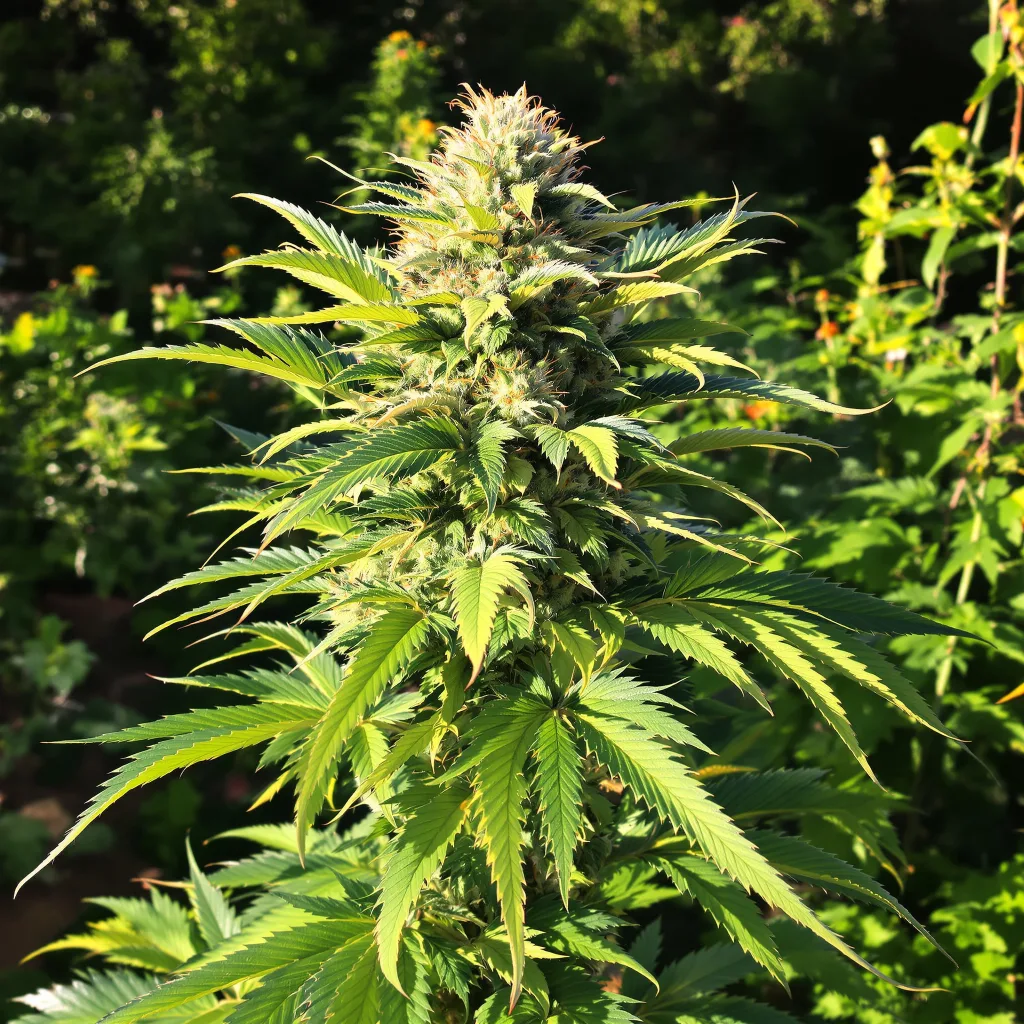
Highveld — Gauteng, Free State, North West. Plant out in October after the last frost; harvest late March to April before the first. Grape Ape's eight to nine week flowering fits this bracket comfortably, which is the point — on the Highveld the frost window sets your deadline, not the strain. Two real risks: the November-to-March thunderstorms soak dense flowers in late March, and hail can shred an open-air plant in minutes. Growing against a north-facing wall with something to pull a cover over is worth the trouble. High-altitude ultraviolet light and cold April nights give Highveld Grape Ape some of the deepest colour you will see on it anywhere in the country.
KwaZulu-Natal and the subtropical coast. This is the hard no outdoors. Summer rainfall, high overnight humidity and a long warm autumn mean a dense indica cola rots from the inside. The local landrace is open-structured and sativa-leaning for precisely this reason. If you want Grape Ape in KwaZulu-Natal, grow it indoors or under cover with forced airflow — not in the open garden.
Limpopo and Mpumalanga lowveld. Mostly frost-free with the longest usable inland season, but the flowering weeks carry both heat stress and humidity. An early finish helps, and so does aggressive defoliation and spacing. The Mpumalanga escarpment is cooler and wetter than the plains below and behaves closer to KwaZulu-Natal than to the lowveld proper.
Eastern Cape and the Garden Route. The transition zone. In the drier west of the province, Grape Ape behaves like a Western Cape plant. On the Garden Route coast, where rain falls all year with no dry season to plan around, dense flowers are a gamble in the open. A greenhouse or a simple covered frame removes most of that uncertainty and makes the cultivar viable.
The mould problem, stated precisely
Botrytis cinerea does not need rain. It needs sustained humidity above roughly 60 percent, still air, and a surface that stays damp. Dew alone will do it. That is why KwaZulu-Natal nights are more dangerous to a Grape Ape cola than a Highveld thunderstorm that dries off by ten in the morning.
Three things reduce the risk without changing cultivar:
- Open the plant up. Remove the interior fan leaves at the stretch and again around week three of flowering, so air moves through the middle of the canopy rather than around it.
- Space wider than feels necessary. Grape Ape is short, so growers crowd it. A metre between plants outdoors is not excessive in a humid province.
- Harvest on the early side. A few days of lost ripeness costs less than a rotted main cola. If a wet week is forecast in the final fortnight, take the plant.
If none of that is practical where you live, the honest answer is a different plant. Airier, looser-flowered feminised cultivars exist for exactly this reason, and growing one well beats growing Grape Ape badly.
Feeding, training and the purple
Grape Ape is not a heavy feeder. Broad-leaf indicas of this lineage take nitrogen well in vegetative growth but burn easily in flower, showing clawed leaf tips and dark, glossy foliage when overfed. Back off rather than push, particularly in the last three weeks.
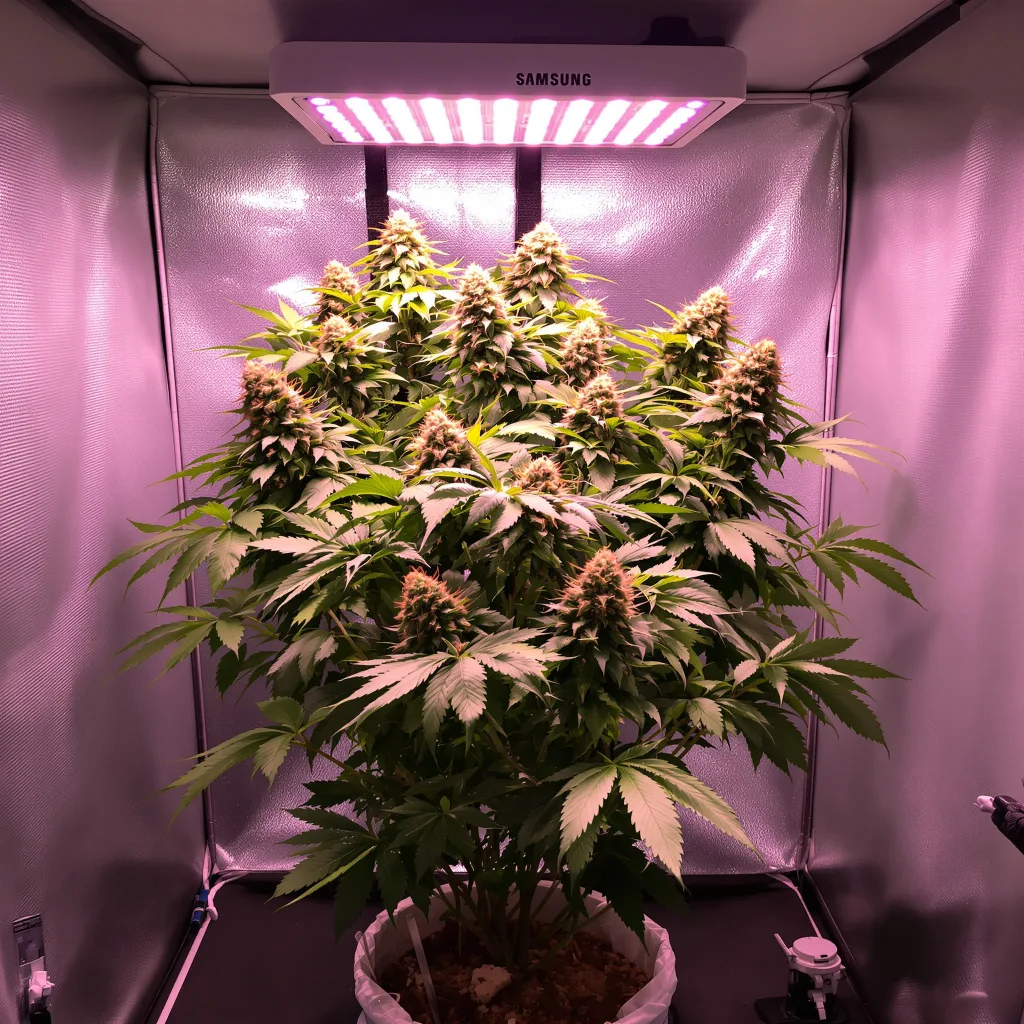
For training, low-stress training — bending and tying branches flat rather than cutting them — suits the plant better than topping-heavy regimes, because the short internodes already produce plenty of bud sites. Spreading those sites sideways gets light into them and improves airflow at the same time. Indoors, a single plant under a net fills a surprising amount of a square metre, which is why Grape Ape is a reasonable candidate for a small indoor tent.
The purple is temperature-driven, not guaranteed. Anthocyanin expression needs night temperatures dropping into the low teens or below during late flower. Highveld and Karoo autumns deliver that; a Durban April generally does not. A Grape Ape that stays green is not a failed Grape Ape.
| Trait | Grape Ape | Grape Cookies | Grape Drink |
|---|---|---|---|
| Structure | Squat, very short internodes, solid colas | Medium height, cookie-style vertical colas | Medium, moderately open branching |
| Flowering length | Around 8–9 weeks | Around 8–10 weeks | Around 8–9 weeks |
| Humid-province outdoor risk | High — density is the weak point | High in the cola cores | Moderate with good spacing |
| Best South African fit | Western Cape, Northern Cape, Highveld | Western Cape, indoor anywhere | Transition zones, covered growing |
| Wind tolerance | Good — low and thick-stemmed | Moderate, needs staking | Moderate |
If the table points you sideways, Grape Cookies and Grape Drink are the two nearest alternatives in the same aroma family.
Who should grow Grape Ape, and who should not
Grow it if: you are in the Western Cape, the Northern Cape or the Highveld and growing outdoors; you want a short plant that does not advertise itself over a wall; you are growing indoors anywhere in the country and want something that stays manageable in height; or you want colour and will have the cold autumn nights to get it.
Do not grow it if: you are growing in the open on the KwaZulu-Natal coast or the Garden Route, where year-round or summer humidity meets a dense-flowered indica; you want the tallest, heaviest outdoor yield you can get, because a taller high-yield cultivar will beat Grape Ape per plant; or you are a first-time grower in a humid province who has not yet learnt to read bud rot early.
The legal position, stated plainly
On 18 September 2018 the Constitutional Court, in Minister of Justice and Constitutional Development v Prince, decriminalised the use, possession and cultivation of cannabis by an adult in private. The Cannabis for Private Purposes Act 7 of 2024 was signed into law on 28 May 2024 to give legislative effect to that judgment; different sections commence on dates fixed by the President, so not every provision is necessarily in force at the time of reading. The Act concerns private adult use and cultivation — commercial dealing in cannabis remains an offence, and the judgment did not legalise trade. Nothing in either the judgment or the Act permits use by a person under 18, or use in public.
This is general information and not legal advice. Read the Act itself and speak to a qualified professional about your own position.
Common questions
When do I plant Grape Ape outdoors in South Africa?
Plant out from September to November depending on your province. Western Cape, Eastern Cape and Northern Cape growers plant September to October; Highveld growers wait until October, after the last frost; KwaZulu-Natal, Limpopo and Mpumalanga can plant September through November. Grape Ape's eight to nine week flowering usually brings harvest into late March or April — earlier than most outdoor cultivars, which is its main advantage on the Highveld, where the first frost ends the season.
Will Grape Ape turn purple in South Africa?
Sometimes, and only where the nights get cold enough in late flower. The purple comes from anthocyanin expression triggered by night temperatures dropping into the low teens or below during the final weeks. Highveld and Karoo autumns deliver that reliably; coastal KwaZulu-Natal in April generally does not. A green Grape Ape has not failed — colour is a temperature response, not a quality marker.
Can I grow Grape Ape outdoors in Durban?
Not comfortably. The KwaZulu-Natal coast has summer rainfall, high overnight humidity and the longest warm autumn in the country, and Grape Ape produces dense flowers with almost no internal airflow. That combination is how grey bud rot starts. Indoors or in a covered space with forced air movement, Grape Ape grows well in KwaZulu-Natal; in an open garden it is a cultivar fighting its climate.
How tall does Grape Ape get outdoors?
Commonly between 1 and 1,8 metres outdoors in good soil, which is short for a South African outdoor plant. Final height depends on how long you vegetate before flowering starts, pot or ground volume, and how much you train. Growers who plant early in September and have deep ground will see the upper end; a plant started late or in a container will stay nearer a metre.
Is Grape Ape good for a first grow?
In a dry province, yes — it is short, structurally sturdy, finishes early and does not need heavy feeding. In a humid province it is a poor first choice, because recognising bud rot inside a dense cola before it spreads is a skill you only build by having seen it. If you are starting out in KwaZulu-Natal or on the Garden Route, run the strain finder for something more open-structured first.
What to do next
If you are growing outdoors in the Western Cape, the Northern Cape or on the Highveld, order Grape Ape feminised in time to plant out in your window — September to October in the Cape provinces, October on the Highveld, after the last frost. If you are on the KwaZulu-Natal coast or anywhere with year-round rain, change the plan rather than the plant: grow Grape Ape under cover, or choose something open-structured for the open garden. Check how long delivery takes to your province before you count back from your planting date.
Related Articles
Ready to Start Growing?
Browse 1,677 cannabis seed varieties with discreet shipping to addresses in all nine provinces and our sourced grow figures.
Shop Cannabis Seeds