Grandaddy Purple Strain in South African Conditions: Density, Colour and the Autumn Risk
Royal King Seeds Editorial Team
Cultivation and editorial team, Royal King Seeds South Africa
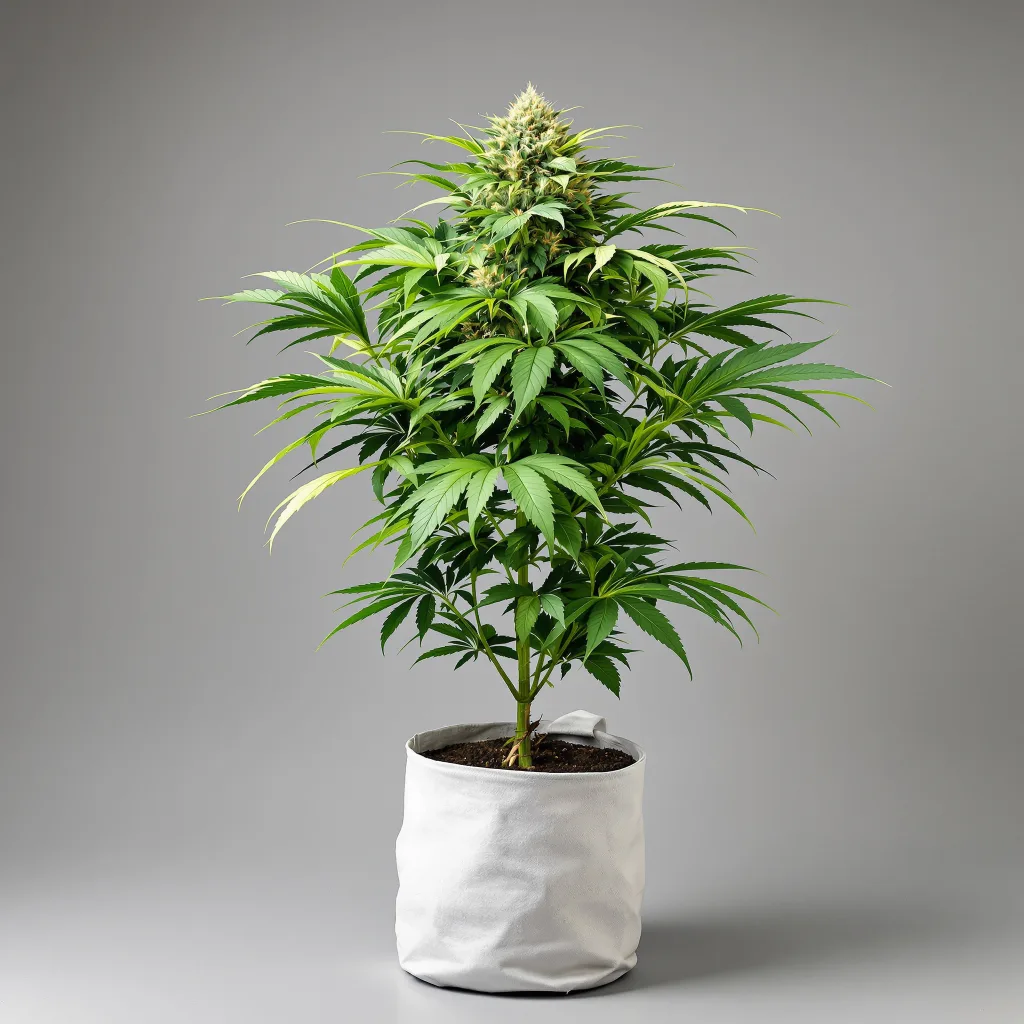
Granddaddy Purple — commonly written Grandaddy Purple — is a good outdoor choice in the Western Cape, the Northern Cape and the drier parts of the Free State, and a genuinely risky one on the KwaZulu-Natal coast and anywhere along the Garden Route where autumn stays damp. The reason is one trait: the buds are dense. Dense flowers hold moisture in the middle, and moisture in the middle of a flower in March is how an outdoor crop is lost. Everything else about this cultivar — the colour, the short structure, the eight-to-nine-week flower — is secondary to whether your flowering weeks are dry.
That split matters more here than almost anywhere, because South Africa has two rainfall regimes. In the Western Cape the rain falls May to August, so a plant flowering in March and April flowers dry. Over most of the rest of the country the rain falls October to March, straight through flowering. Advice written for one region is wrong for the other.
What Granddaddy Purple is and where it came from
Granddaddy Purple is an indica-dominant cultivar bred in California in the early 2000s by crossing Purple Urkle with Big Bud. Purple Urkle supplied the anthocyanin expression — the pigment that turns leaf and calyx violet — and the grape-and-berry aroma it is known for. Big Bud supplied the weight: fat, conical, tightly packed flowers on a compact frame.
Reported effects are heavily body-leaning and sedating, which is why it tends to be described as an evening cultivar rather than a daytime one. Those are reported characteristics of the cultivar, not claims about what it will do for any individual.
The breeding history matters here for one practical reason. Granddaddy Purple was selected in an indoor and Mediterranean-outdoor context, where the grower controls humidity or the season is dry at the end. It was never selected under subtropical summer rain. That is the mismatch South African growers have to plan around.
Density is the single trait that decides this grow
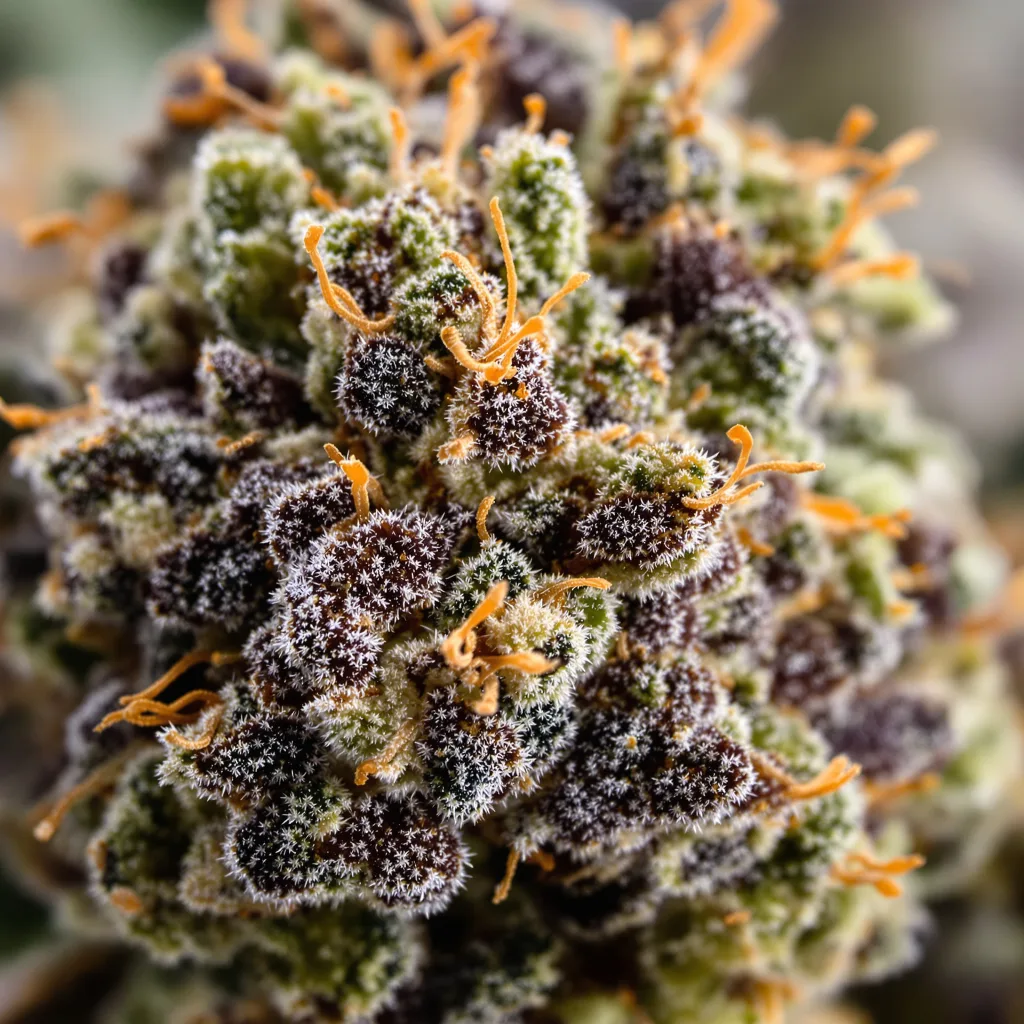
Bud density means how tightly the calyxes pack together inside a flower. Granddaddy Purple packs them hard, which is exactly what makes the flowers heavy and exactly what makes them vulnerable. Botrytis — grey mould, the rot that hollows a cola from the inside — needs still, humid air and a surface that stays wet. A dense flower provides both at its core, even when the outside looks dry.
Open-structured cultivars like Durban Poison breathe through their flowers. Granddaddy Purple does not. You will usually find rot in this cultivar from the inside out, often first at the thickest point of the main cola, and often several days after the humid spell that caused it. By the time the outer calyxes brown, the centre is already gone.
This is why defoliation and open training are not optional extras on a plant like this. Removing leaves that shade the interior of the canopy, and spreading the branches so air moves between them, changes the outcome more than any feeding decision you will make. The same logic is covered in detail in our guide to matching plant traits to a damp South African autumn.
Province by province: where Granddaddy Purple actually finishes
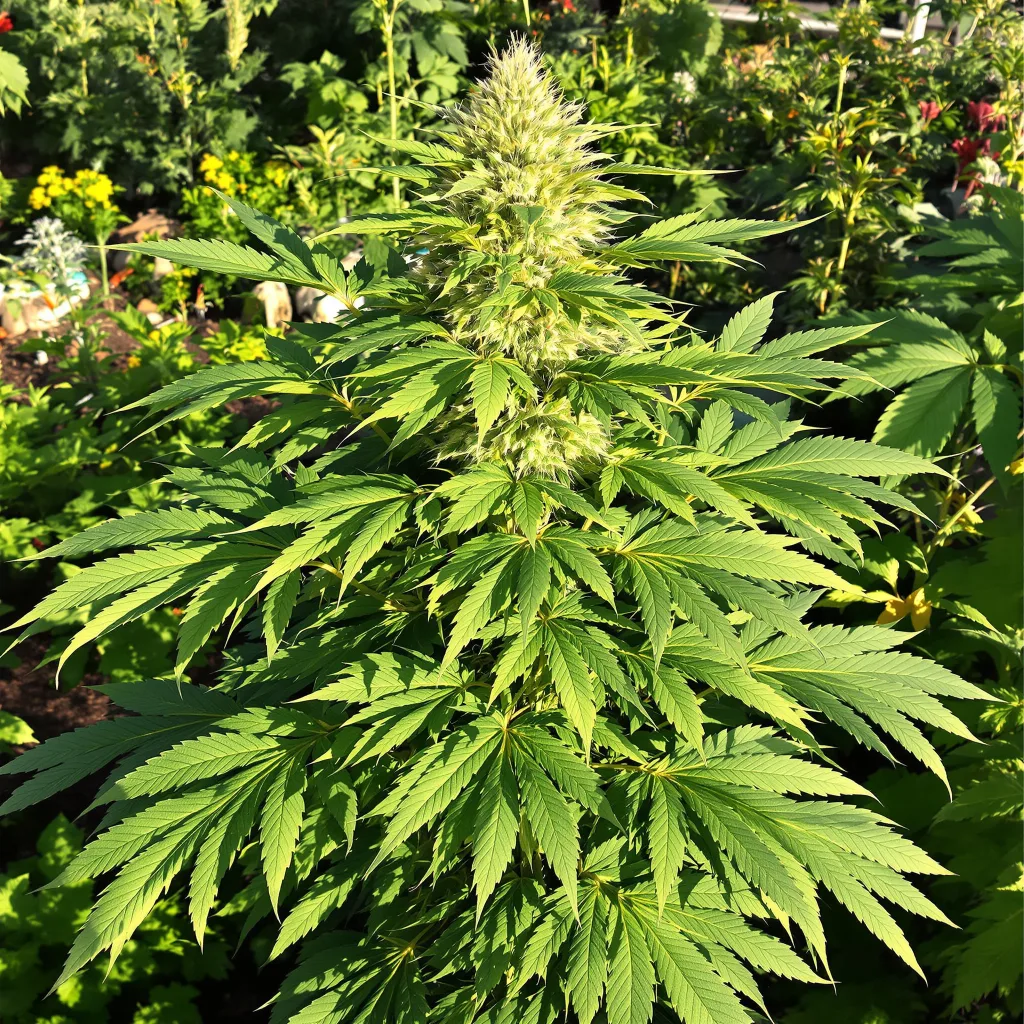
Western Cape. The best fit in the country. Plant out September to October once the winter rain has eased, and expect to harvest March to April into dry, bright weather. Mould pressure is low because flowering happens in the dry half of the year. The real problem is wind — the south-easter runs hard through summer across the Peninsula and the Boland, and a plant carrying heavy colas snaps or lodges. Stake early, keep the structure short and wide rather than tall, and use low-stress training so the weight sits on several supported branches instead of one.
Northern Cape and the Karoo. Also a strong fit, for the opposite reason: humidity is negligible and rot is a non-issue. Plant September to October, harvest March to April. Heat and water are the constraints. Midsummer afternoons above the mid-thirties will stall flower development and can cause foxtailing, where the flower throws new spiky growth instead of fattening. Afternoon shade cloth and irrigation are not optional — nothing finishes here without water.
Highveld — Gauteng, Free State, North West. Workable, with two conditions. Plant out in October after the last frost and harvest late March into April, before the first frost closes the season. Granddaddy Purple's eight-to-nine-week flower fits that window with room to spare, which is its main advantage on the Highveld. The risks are November-to-March thunderstorms soaking dense flowers, and hail, which destroys an open-air plant in minutes. Growing under a clear roof or in a tunnel removes most of that. The compensation is colour: big day-night temperature swings at 1 200 to 1 800 m bring out the purple better than almost anywhere.
Lowveld — Limpopo and Mpumalanga. Long frost-free season, which this cultivar does not need, paired with heat stress through midsummer and humidity in the flowering weeks, which it handles badly. Possible with aggressive thinning, generous spacing and real airflow, but you are fighting the plant's structure. The Mpumalanga escarpment is cooler and wetter than the plains below it and is the harder of the two.
KwaZulu-Natal and the subtropical coast. This is the one to avoid outdoors. Warm nights, high overnight humidity and summer rainfall through April and May make it bud-rot country, and a dense indica is the worst possible shape for it. If you want purple colour in KZN, grow it in a tent, or choose genetics selected for an indoor room and keep this cultivar off the open ground.
Eastern Cape and the Garden Route. Depends where you stand. The western Eastern Cape behaves more like the Cape and is fine; the eastern side shifts towards summer rainfall and becomes marginal. The Garden Route coast receives rain all year, with no dry season to finish into, which makes covered growing the sensible default rather than a precaution.
Why the purple shows up here more than in many places
The colour in Granddaddy Purple is genetic — the plant carries the anthocyanin expression regardless — but how strongly it shows depends on night temperatures in the last two to three weeks of flowering. Cool nights slow chlorophyll production, letting the purple pigment through.
Highveld autumns deliver that reliably. Nights in late March and April drop sharply at altitude while days stay warm, and that swing is exactly what pulls colour out. Karoo nights do the same. Coastal KwaZulu-Natal rarely cools enough, so plants there often finish green or only faintly tinged even when the genetics are identical.
One thing not to do: chilling a plant deliberately to force colour. Dropping night temperatures below roughly 12 to 15 °C to chase purple slows ripening and invites condensation on cold flower surfaces, which is the starting condition for rot. Let the season do it or accept green.
Training, feeding and pot size
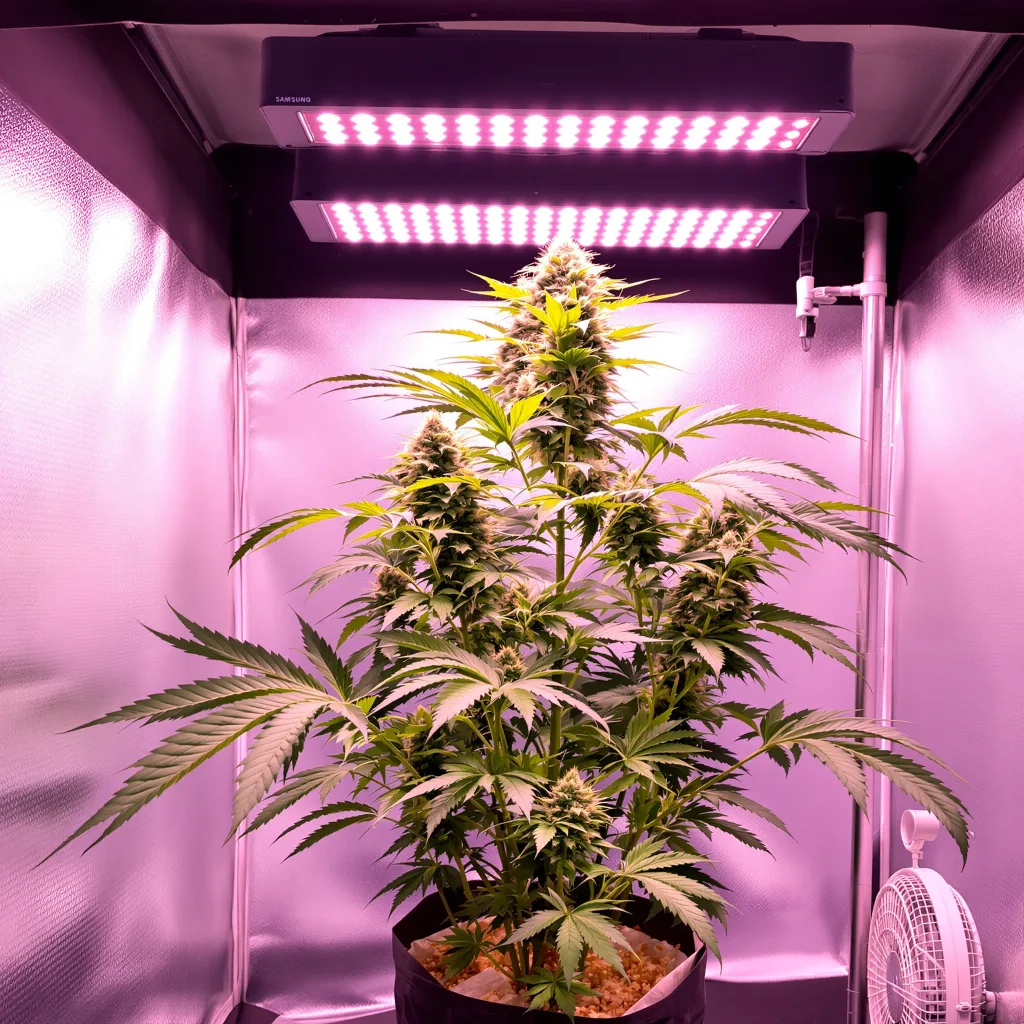
Granddaddy Purple is short and bushy. Indoors it typically stays in the one-to-one-and-a-half metre range without much intervention. Outdoors in a long inland season, in open ground, it will go taller and wider than most indoor growers expect, but it remains a squat, branchy plant rather than a lanky one.
That structure suits topping and low-stress training, where you bend branches down and tie them rather than cutting, producing several even colas instead of one dominant one. Spread colas are lighter individually, dry faster after rain and catch less wind.
On feeding, this cultivar is moderately sensitive to nitrogen late in the cycle. Pushing nitrogen into week five or six of flower keeps the canopy leafy, which holds humidity exactly where you do not want it. Taper nitrogen as flowering sets in and let the plant pull from the leaves. Yield figures vary too much with pot size, season length and training to quote a reliable number — a 30-litre pot on a Cape patio and a plant in open Karoo ground under irrigation are not the same crop.
How it compares with two cultivars growers weigh against it
| Cultivar | Flower structure | Best South African fit | Weakest fit |
|---|---|---|---|
| Granddaddy Purple | Very dense, conical, compact plant | Western Cape, Northern Cape, Highveld under cover | KwaZulu-Natal coast, Garden Route |
| Grape Ape | Dense, similar purple expression, slightly more open | Western Cape and Highveld, same dry-autumn logic | Subtropical coast, for the same density reason |
| Durban Poison | Open, airy, sativa-leaning spears | KwaZulu-Natal and the humid coast | Nowhere badly, but produces no purple colour |
If you are drawn to Granddaddy Purple for the colour and you live where autumn is wet, the honest answer is that Grape Ape will not rescue you — it fails for the same structural reason. The real alternative is an open-structured cultivar, or a shorter cycle. Autoflowering genetics finish on a fixed clock regardless of daylight, which lets a coastal grower take a crop off in January or February before the worst of the autumn damp arrives.
Who should not grow Granddaddy Purple
Do not choose this cultivar if you are growing outdoors on the KwaZulu-Natal coast, in the Mpumalanga escarpment's wetter pockets, or anywhere on the Garden Route without a roof. Do not choose it if this is your first outdoor season and you are not prepared to thin the canopy, stake heavily and inspect colas weekly from week four of flower.
It is also the wrong plant if you need something discreet and fast on a small balcony with limited airflow — a dense indica in still air is asking for trouble. And if you specifically want a daytime, clear-headed effect, the reported profile of Granddaddy Purple points the other way entirely; use the strain finder to filter on the characteristics you actually want rather than on the colour of the picture.
If you decide to grow it
Start with feminised seed so the whole plot flowers, plant out according to your zone's window — September to October in the Cape and Karoo, October after last frost on the Highveld — and train wide and low from the first topping. Change that plan if your flowering weeks are wet: on the summer-rainfall coast, move the plant under cover or choose an open-structured cultivar instead, because no amount of technique fixes a dense flower sitting in April humidity.
On the legal position: on 18 September 2018 the Constitutional Court, in Minister of Justice and Constitutional Development v Prince, decriminalised the use, possession and cultivation of cannabis by an adult in private. The Cannabis for Private Purposes Act 7 of 2024 was signed into law on 28 May 2024 to give legislative effect to that judgment, and different sections commence on dates fixed by the President, so not every provision is necessarily in force at the time of reading. The Act concerns private adult use and cultivation — commercial dealing in cannabis remains an offence, and the judgment did not legalise trade. Nothing in either the judgment or the Act permits use by a person under 18, or use in public. This is general information and not legal advice; read the Act and speak to a qualified professional about your own position.
Common questions
How long does Grandaddy Purple take to flower?
Granddaddy Purple flowers in roughly eight to nine weeks indoors from the switch to a 12-hour light cycle. Outdoors in South Africa that places harvest between March and April in the Western Cape, Northern Cape and on the Highveld, and April into May in the lowveld and on the KwaZulu-Natal coast. The shorter flowering window is one of its advantages on the Highveld, where the first frost sets the deadline rather than the strain.
Will Grandaddy Purple turn purple in South Africa?
Usually, in the right places. The purple expression is genetic but needs cool nights in the final two to three weeks of flowering to show strongly. Highveld and Karoo autumns deliver that swing reliably because of altitude and dry air. Plants finishing on the warm, humid KwaZulu-Natal coast often stay green or show only a faint tinge. Do not chill plants artificially to force the colour — it slows ripening and encourages condensation on the flowers.
Can Grandaddy Purple be grown outdoors in KwaZulu-Natal?
It can be planted there, but it is a poor match outdoors. KwaZulu-Natal has warm, humid summer nights and rain through the flowering months, and Granddaddy Purple produces very dense flowers that trap moisture at their centre. That combination is the main cause of botrytis, or grey mould. Growers on the subtropical coast get better results from open-structured, airy cultivars, or from growing Granddaddy Purple indoors or in a well-ventilated tunnel.
Is Grandaddy Purple suitable for a first-time grower?
In the Western Cape or Northern Cape, with staking and regular canopy thinning, a careful beginner can finish it. On the summer-rainfall side of the country it is not a beginner's plant outdoors, because it demands defoliation, spacing and weekly inspection of the colas from mid-flower onwards. A first grow in a humid region is better spent on something open-structured that forgives a missed week.
How tall does Grandaddy Purple get?
It stays compact — typically around one to one and a half metres indoors without training, and squat and branchy rather than tall. Outdoors in a long inland season with open ground and good water, it will exceed that and spread wide, but it remains a bushy indica shape. Topping and low-stress training spread the weight across several colas, which is worth doing anywhere the south-easter runs or storms are likely.
Related Articles
Ready to Start Growing?
Browse 1,677 cannabis seed varieties with discreet shipping to addresses in all nine provinces and our sourced grow figures.
Shop Cannabis Seeds