Tart Pops Strain: How It Behaves in South African Conditions
Royal King Seeds Editorial Team
Cultivation and editorial team, Royal King Seeds South Africa

Tart Pops is a dense-flowered, candy-lineage hybrid with a short flowering window, and that combination makes it a good fit for the dry-summer Western Cape, the Northern Cape and the Highveld — and a genuinely risky choice on the KwaZulu-Natal coast or in the lowveld. The short finish is the reason it works inland: a plant that can be cut in late March or early April beats the first Highveld frost and the tail end of the summer rains.
The density is the reason it fails in humid country, because tightly packed flowers hold moisture in their cores where you cannot see it. If you grow outdoors in a summer-rainfall province and you have no cover, choose something more open-structured.
Everything below assumes photoperiod feminised plants grown from seed, planted out in the Southern Hemisphere spring — September to November depending on province — and harvested in autumn, March to May. Indoors, region matters far less and the notes on feeding and structure still apply.
What Tart Pops is, and what its lineage predicts
Tart Pops sits in the modern American dessert-and-candy family: the group of cultivars bred for sweet, sharp, fruity terpene profiles and tight, resin-heavy flowers rather than for field resilience. Lineage in this corner of the market is reported inconsistently across sellers, and the honest position is that Tart Pops is described as a cross within the sweet-fruit candy pool — Apples and Bananas and Zkittlez-type parents are the ones most often named. Treat the exact pedigree as unverified. What matters for a grow decision is not the family tree but the traits that family reliably carries.
Those traits are consistent enough to plan around: an indica-leaning growth habit with short internodes (the gap between branch nodes on the stem), a flowering period commonly reported at eight to nine weeks indoors, flowers that finish hard and dense rather than airy, and strong colour expression when nights turn cold. Reported effects in this family lean towards a heavy, relaxed character with a sweet-citrus, sherbet-like smell. That is a description of what growers report, not a claim about what the plant does for anyone.
How Tart Pops runs through a South African season
Outdoors, photoperiod plants here begin flowering as day length falls after midsummer, so flowering generally initiates from late January into February. A cultivar with an eight to nine week flower can therefore be finished from late March to mid-April in most of the country — earlier than the April to May window that longer sativa-leaning plants need.
- Western Cape: plant out September to October once the winter rain has eased, harvest March to April. Flowering falls in the dry half of the year, which is the single best match for a dense cultivar like Tart Pops. Wind is the constraint, not rot — the south-easter runs hard through summer across the Peninsula and the Boland, so stake early.
- Highveld (Gauteng, Free State, North West): plant out in October after the last frost, harvest late March into April. The short flower is what makes Tart Pops viable here, because the first frost, not the strain, sets your deadline. The big day-night temperature swing at 1 200 to 1 800 m brings out purple and magenta in this family. Hail during November to March thunderstorms is the real risk to open-air plants.
- Northern Cape and Karoo: plant out September to October, harvest March to April. Mould pressure is negligible and light is never the limit. Water and midsummer heat are, and nothing finishes here without irrigation.
- KwaZulu-Natal coast: plant out September to November, harvest April to May. High overnight humidity through the whole summer makes this the hardest place in the country to finish dense flowers. Tart Pops outdoors here needs cover, ruthless defoliation and a willingness to cut early.
- Lowveld (Limpopo, Mpumalanga): plant out September to November, harvest April to May. The warmth is an advantage in vegetative growth and a liability in flower, when heat plus humidity soften resin and invite rot. The Mpumalanga escarpment is cooler and wetter than the plains below and behaves closer to a coastal site.
- Eastern Cape and Garden Route: plant out September to October, harvest March to April. Rainfall shifts from winter-dominant in the west to summer-dominant in the east, and the Garden Route coast gets rain all year, so a greenhouse or a simple rain cover removes most of the guesswork.
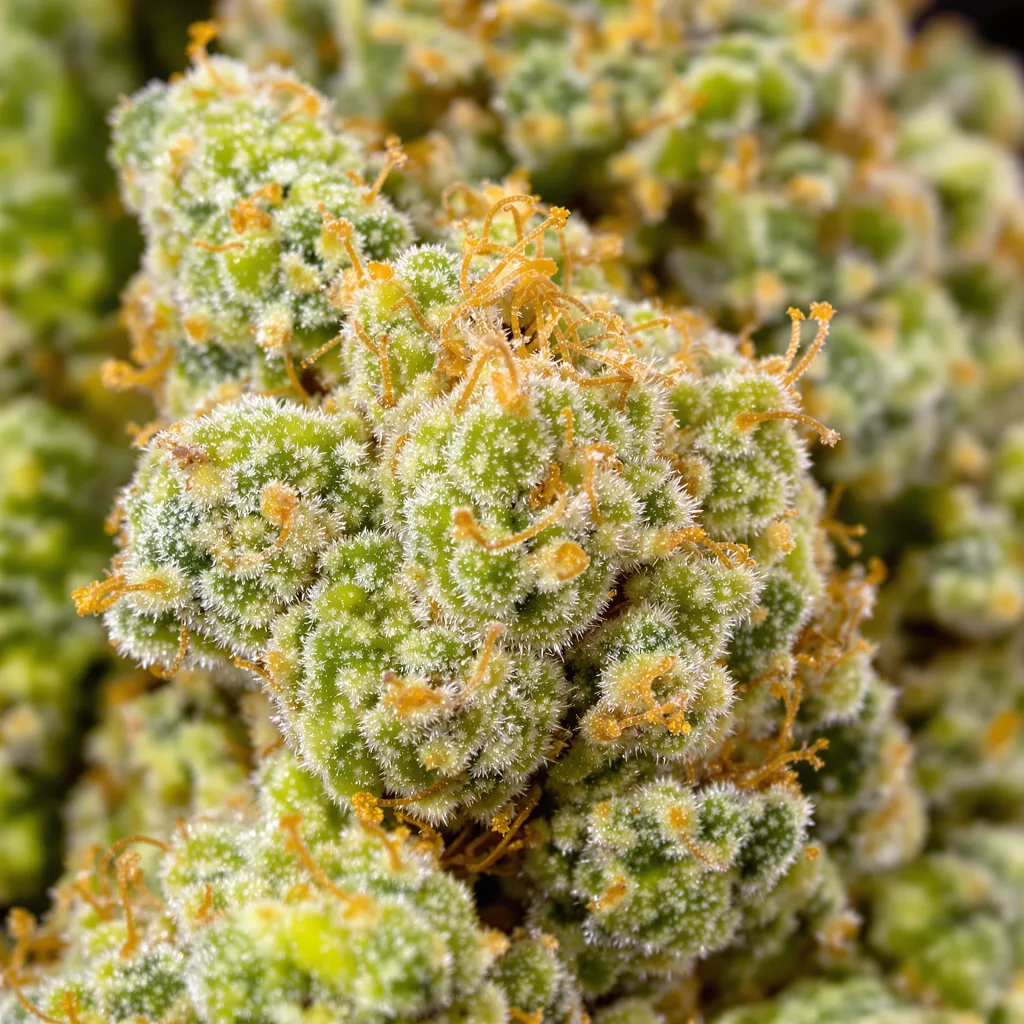
Bud density is the whole decision
Botrytis — grey bud rot — begins inside a flower, not on its surface. It needs moisture that does not dry out, and a dense Tart Pops cola in KwaZulu-Natal in April provides exactly that. By the time the outer bracts brown, the core is already gone.
This is why national advice is useless for this cultivar. In the winter-rainfall Western Cape, flowering happens in the dry season and the same genetics ripen cleanly with nothing more than airflow and staking. In the summer-rainfall provinces, rain falls October to March and overlaps the early flowering weeks, so the same plant needs a roof, spacing, and lower leaves removed from the inner canopy. If you are growing uncovered on the coast, you are better served by genetics selected for outdoor structure with looser flower formation.
The practical rule: dense cultivars belong under cover in summer-rainfall regions and can go bare-ground in the Western Cape, the Karoo and most of the Highveld.
Height, structure and training
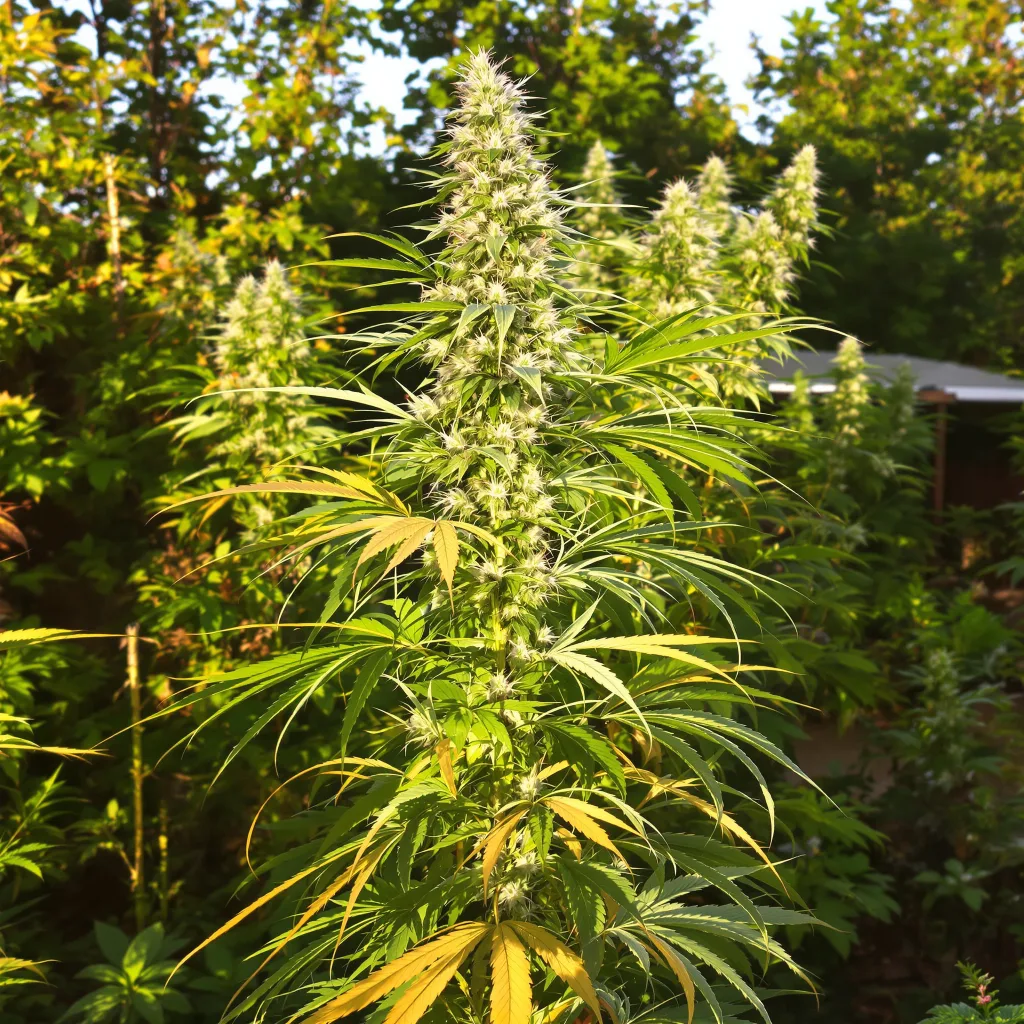
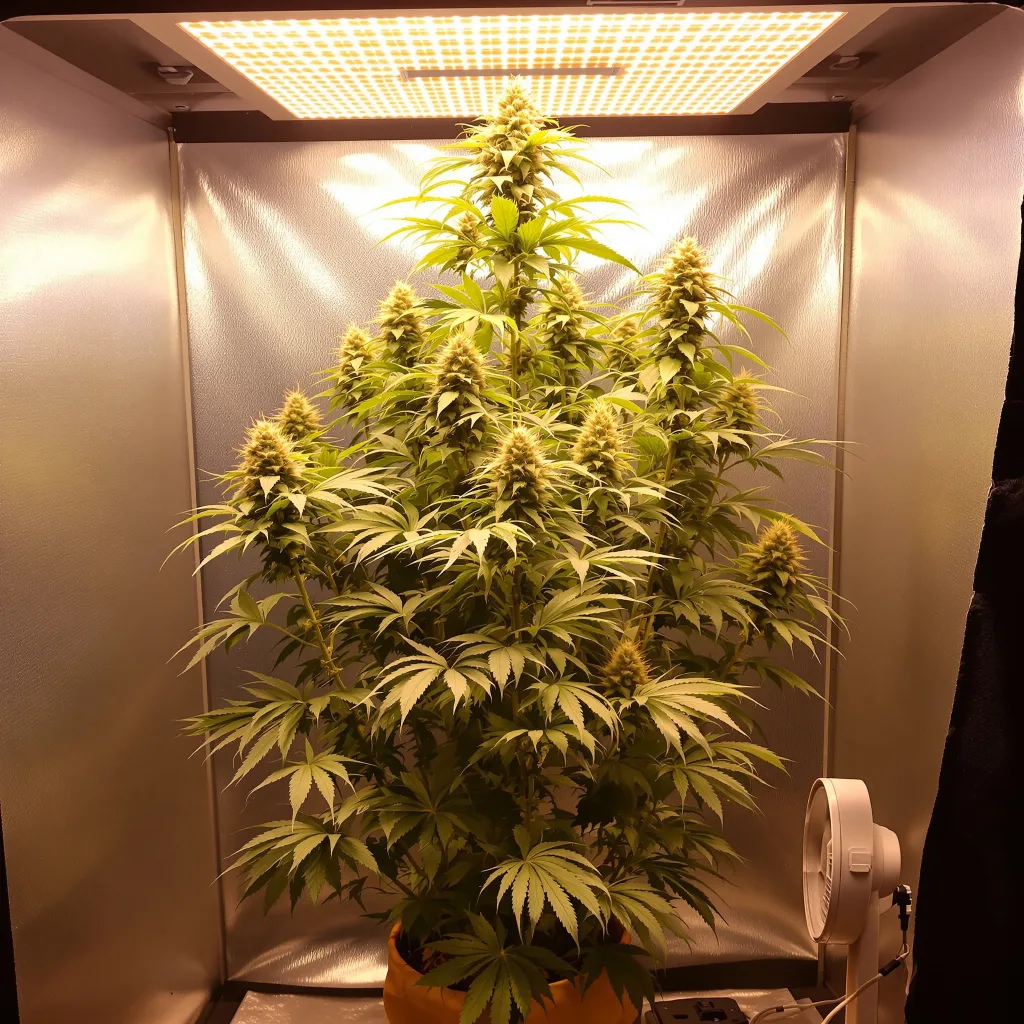
Tart Pops grows short and wide rather than tall, with thick side branching and short internodes. Outdoors in a long season it will still stack — a September planting in Limpopo or KwaZulu-Natal has three to four months of vegetative growth and can reach chest height or more — but it does not stretch like a haze. Indoors under a 12-hour flip it typically stays manageable in a tent.
The short internodes are a mixed blessing. They concentrate flower mass, which is what you want, but they also close the canopy and trap humid air. Topping once or twice and using low-stress training to open the centre does more for final quality in this cultivar than any feeding change. In the Western Cape, keep structures short and staked: wind snaps heavy, top-loaded branches more often than rain ruins them. On the Highveld, plan for hail cover over the plant, not just a drip line under it.
Feeding, and where Tart Pops gets touchy
Candy-lineage hybrids are generally not heavy feeders, and Tart Pops behaves accordingly. The common mistake is pushing nitrogen into week three or four of flower chasing bigger colas — it delays ripening, dulls the terpene profile and thickens the canopy you are trying to open.
Two specifics worth watching in South Africa. First, calcium and magnesium: under the intense ultraviolet light and hot afternoons of the Highveld and the Karoo, plants transpire hard and this family shows interveinal yellowing and rusty spotting on mid-canopy leaves when cal-mag runs short, particularly in coco or under reverse-osmosis water. Second, potassium and phosphorus in the last fortnight — mild deficiency here shows as premature fading rather than dramatic damage, and it costs you the colour this cultivar is bought for.
The purple expression depends on cold nights, not on feeding. Highveld autumns deliver that naturally in March and April. Coastal KwaZulu-Natal does not, so expect a greener finish there regardless of what you feed.
| Trait | Tart Pops | Zkittlez | Durban Poison |
|---|---|---|---|
| Structure | Short, wide, thick side branching, tight internodes | Short and bushy, slightly more open | Tall, lanky, open and airy |
| Flower density | High — needs cover in summer-rainfall regions | Medium to high | Low to medium — the reason it survives the KZN coast |
| Reported flowering time | Roughly 8 to 9 weeks | Roughly 8 to 9 weeks | Roughly 8 to 9 weeks, longer outdoors |
| Best South African fit | Western Cape, Northern Cape, Highveld | Western Cape, Highveld, covered elsewhere | KwaZulu-Natal, lowveld, any humid site |
| Main risk here | Bud rot in humid flowering weeks | Bud rot, though slightly less exposed | Height and late finish, not mould |
Who should grow Tart Pops here, and who should not
Grow Tart Pops if you are in the Western Cape, the Northern Cape or on the Highveld and you want a compact plant that finishes before the season turns against you. Grow it if you run a tent or a greenhouse anywhere in the country, since a controlled environment removes the density problem entirely — in that case treat it as a straightforward indoor cultivar and manage humidity in late flower. Grow it if you want colour and a sweet-citrus smell more than raw weight.
Do not choose Tart Pops for an uncovered outdoor grow on the KwaZulu-Natal coast, along the Garden Route or in the Mpumalanga escarpment. Do not choose it if bulk is your goal — the density is real, but plant size is modest, and growers after weight per plant do better with cultivars bred for yield and a long lowveld veg. And do not choose it if your season is short or your space is tiny; an autoflowering plant that ignores day length is a simpler answer for a balcony or a late-December start.
Before you plant: the legal position in brief
On 18 September 2018 the Constitutional Court, in Minister of Justice and Constitutional Development v Prince, decriminalised the use, possession and cultivation of cannabis by an adult in private. The Cannabis for Private Purposes Act 7 of 2024 was signed into law on 28 May 2024 to give legislative effect to that judgment; different sections commence on dates fixed by the President, so not every provision is necessarily in force as you read this. The Act concerns private adult use and cultivation — commercial dealing in cannabis remains an offence, and the judgment did not legalise trade. Nothing in the judgment or the Act permits use by a person under 18, or use in public. This is general information and not legal advice; read the Act itself and speak to a qualified professional about your own position.
If you are in a dry-summer or high-altitude region and you want the short finish, start Tart Pops from feminised seed in September or October and plan to cut in late March or April. If you are on the humid coast and cannot put a roof over the plants, that recommendation reverses — use the strain finder to filter for open-structured genetics that ripen in April and May instead.
Common questions
When should I plant Tart Pops outdoors in South Africa?
Plant out in the Southern Hemisphere spring: September to October in the Western Cape once the winter rain eases, October on the Highveld after the last frost, and September to November in KwaZulu-Natal and the lowveld. Harvest generally falls between late March and April for a cultivar with an eight to nine week flower, later in the subtropical provinces. Overseas calendars for this strain are six months out of step and will put your plants in the ground at the wrong end of the year.
Is Tart Pops mould resistant?
No. Tart Pops forms dense, tightly packed flowers, which is the opposite of what resists grey bud rot. In the winter-rainfall Western Cape that hardly matters, because flowering happens through the dry summer. In the summer-rainfall provinces, and especially on the KwaZulu-Natal coast, dense flowers need cover, wide spacing and thinning of the inner canopy — or a different cultivar.
How tall does Tart Pops get outdoors here?
Height varies with how long the plant vegetates before day length triggers flowering, so a September planting in Limpopo finishes much larger than an October planting in the Free State. The habit itself is short and wide with tight internodes rather than tall and stretchy, so expect a bush that needs support for heavy top growth rather than a plant you have to fight for height.
Will Tart Pops turn purple in South Africa?
Colour in this family depends on cold nights in the final weeks. Highveld autumns at 1 200 to 1 800 m deliver that in March and April, and Karoo nights cool sharply too, so purple and magenta expression is common there. Coastal KwaZulu-Natal stays warm overnight well into autumn, so the same seed usually finishes green on the subtropical coast.
Is Tart Pops a good first strain to grow?
It is workable for a first grow indoors or in a greenhouse, where you control humidity. For a first uncovered outdoor grow in a summer-rainfall province, it is a hard opener, because the mistake it punishes — a closed, humid canopy in the flowering weeks — is the one beginners make most often. A more open-structured plant is a kinder place to learn.
Related Articles
Ready to Start Growing?
Browse 1,677 cannabis seed varieties with discreet shipping to addresses in all nine provinces and our sourced grow figures.
Shop Cannabis Seeds