Male Weed Plant: What the Label Controls and What It Does Not
Royal King Seeds Editorial Team
Cultivation and editorial team, Royal King Seeds South Africa
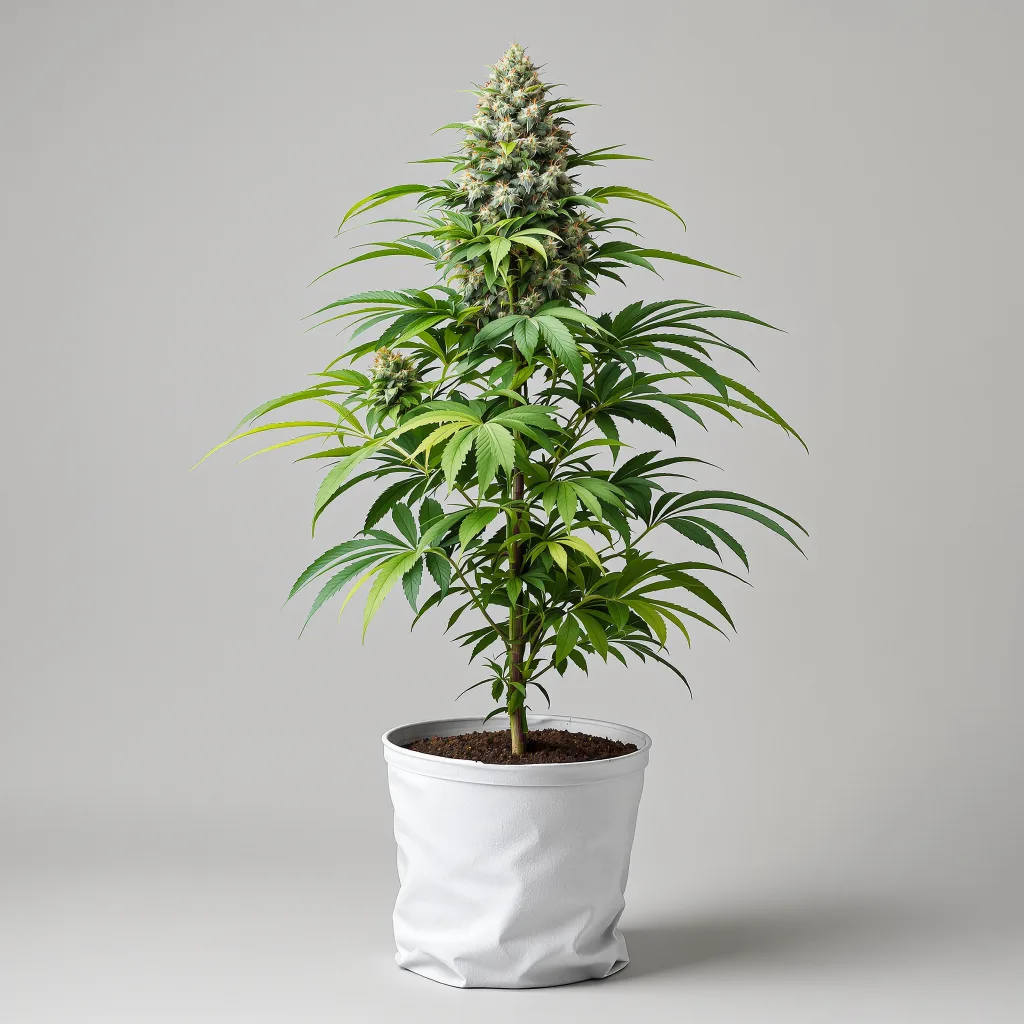
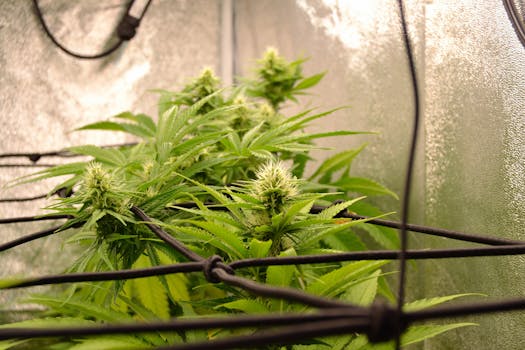
A male weed plant produces pollen sacs instead of resin-coated flowers, and the label predicts exactly one thing with confidence: left standing, that plant will shed pollen, and any female within reach of that pollen will spend the rest of the season building seeds inside her flowers instead of bulking them out. That is the whole of what "male" controls.
It does not tell you when the plant will reveal itself, whether the rest of your garden is safe once it is removed, whether a female nearby has quietly thrown male flowers of her own, or whether the plant is worth nothing. Those four gaps cause more ruined harvests than the males do.
What the label reliably controls
Cannabis is usually dioecious, meaning pollen and seed are carried on separate plants. A male plant builds clusters of small sacs on short stalks at the nodes — the points where a branch meets the stem — and those sacs split open and release pollen. Pollen moves on wind and on anything that touches it: hands, sleeves, secateurs, a dog walking through the bed. How far it travels depends on wind, terrain and whether the plant is sheltered, so a male three gardens away in a windy Free State summer is a different risk from one behind a wall in a Durban back yard.
The consequence in a female is predictable. A pollinated flower diverts resources into seed, bract swelling increases, and the flower you harvest contains hard seeds that have to be picked out. The flower is not poisonous and the resin does not vanish, but yield of usable material drops and the texture changes. If your goal is unseeded flower, the male is removed. That part is simple and it is the only part that is.
What the label fails to predict
Growers treat "male" as a complete diagnosis, and it is not.
- It does not predict timing. Sex shows when the plant is ready, not on a date. Photoperiod plants — the ordinary kind that flower when nights lengthen — generally reveal preflowers at the nodes some weeks into vegetative growth, but the exact point varies with genetics, pot size, light and how hard the plant has been pushed.
- It does not predict the behaviour of your females. Removing every male does not guarantee seedless flower. A female under stress can produce male flowers herself, and a single such cluster inside a plant will seed that plant and its neighbours.
- It does not predict quality in the offspring. A male contributes half the genetics of any seed he makes. Nothing about his appearance — vigour, height, how early he showed — tells you what his daughters will smell like or how they will finish.
- It does not predict worthlessness. Males carry resin, just far less of it and with no flower mass behind it. They are the raw material of every breeding project and every seed you have ever bought.
| Label | Predicts reliably | Leaves open |
|---|---|---|
| Male | Pollen release if left to mature | When it shows; what its offspring are like; whether other plants have also thrown male flowers |
| Female | Flowers with pistils, the harvestable part | Whether stress will push it to produce male flowers later in the run |
| Intersex (both flower types on one plant) | That seeds are likely in that plant and its neighbours | Whether the cause was genetic or a stress event you can correct |
| Feminised seed | That the seed was produced without a conventional male parent | That no plant will ever throw a male flower under heat, light leaks or damage |
| Autoflowering seed | That flowering begins on age, not daylength | Nothing about sex unless the seed is also feminised |
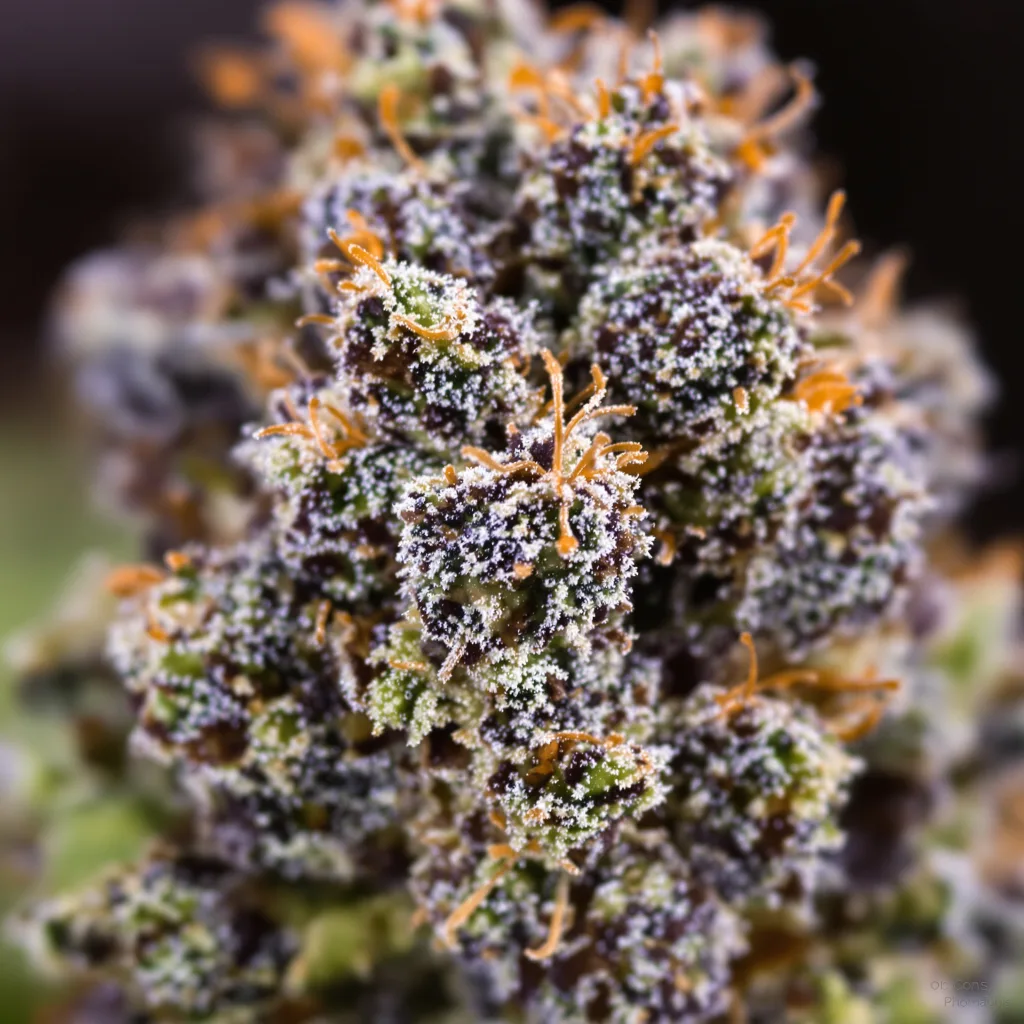
Where and when sex actually shows
Look at the nodes on the main stem, roughly from the fourth or fifth node upward, and use a loupe or a phone camera at full zoom. A male preflower is a small rounded sac on a short stalk, hanging slightly away from the stem. A female preflower is a teardrop-shaped bract sitting tight against the stem, usually with one or two fine white hairs pushing out of the tip. The stalk is the tell: females do not have one at that stage.
Outdoors in South Africa, seedlings planted from September to November grow through long days and often show preflowers during that stretch, well before flowering proper begins as nights lengthen from about late December into January. Indoors, many growers hold plants in vegetative growth until sex is visible, then switch the light cycle. With autoflowering plants that start flowering on age, you get far less warning, because flowering begins within weeks of germination and a male will be dropping pollen while a photoperiod plant in the same bed is still stacking leaves.
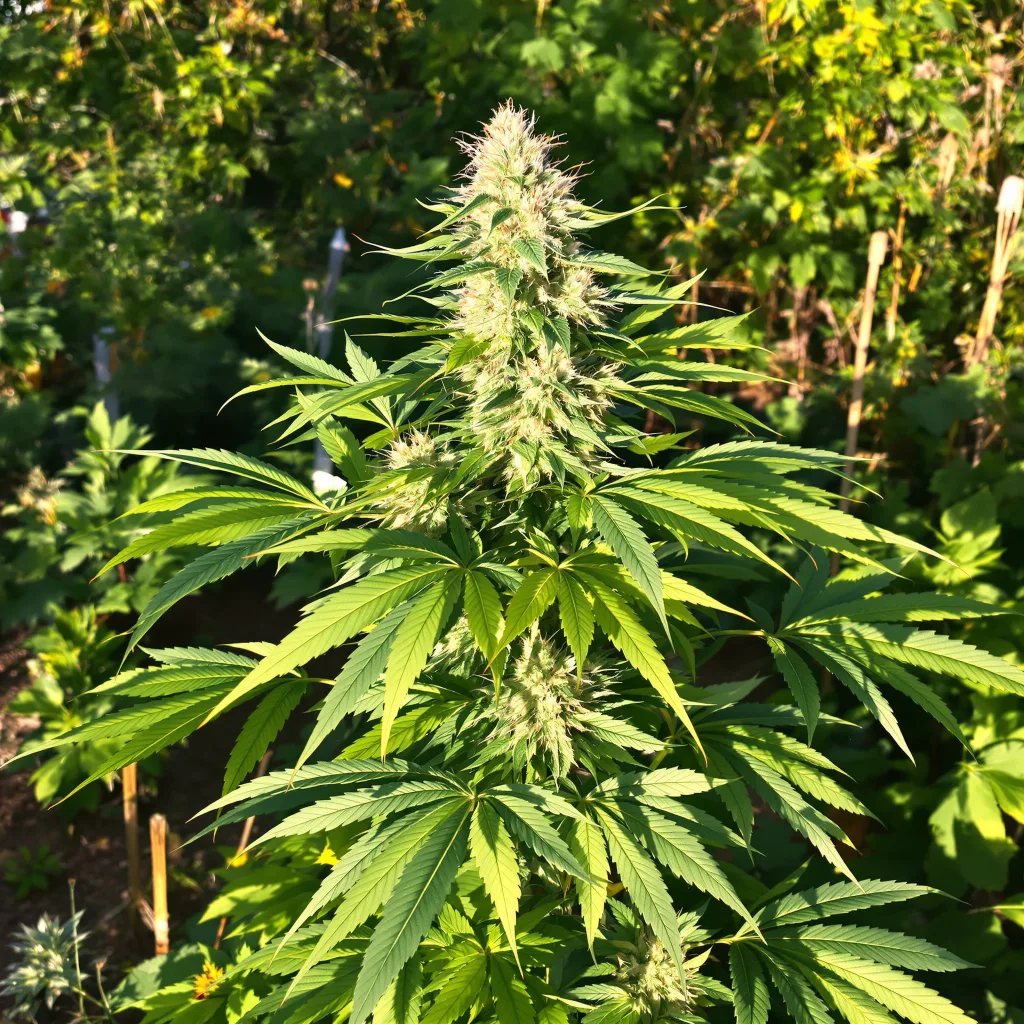
A worked example: Gauteng, early January
You planted six seeds from a regular packet in the first week of October in Pretoria. By early January, nights are lengthening and the plants are stretching. You check nodes with a loupe and find three plants with stalked sacs at the fourth node, two with white pistils, and one you cannot call yet.
Cut the three males at the base and carry them out of the garden in a bag rather than shaking them down the path — a sac that opens on the walk puts pollen exactly where you did not want it. Leave the unclear plant and check it again in three or four days; it will declare itself. Then keep watching the two females for the next fortnight, because the plant that was ambiguous in January is the plant most likely to produce a few male flowers in February. If you would rather not run this check at all, feminised seeds remove the male plants from the equation, which is why most growers working with limited space use them.
Why a stray male costs more in a summer-rainfall garden
Over most of the country — Gauteng, Limpopo, Mpumalanga, North West, the Free State, KwaZulu-Natal and much of the Eastern Cape — rain falls October to March, straight across flowering. Seeded flowers sit heavier and hold moisture in the bract tissue for longer, which gives botrytis a better start in exactly the weeks when humidity is already the main problem. The pollination costs you yield and then compounds the mould risk.
In the Western Cape, rain falls May to August and flowering happens dry, so a pollinated plant there is mostly a yield and labour problem rather than a rot problem. The southern and Garden Route coastal strip sits between the two, with no pronounced dry season and enough marine humidity to make seeded flower a nuisance regardless of the month. If pollen drift from neighbouring gardens or feral plants is a known issue where you live, growing under cover or indoors under your own control removes the variable entirely.
When keeping a male is the right call
Keep a male if you intend to make seed, and only then. If you do, isolate it well away from flowering females, in a separate room or a different part of the property, and collect pollen onto paper or into a sealed container rather than letting the plant open where it stands. Choose on structure, vigour, how early it flowers and the smell of the crushed stem, while accepting that none of those traits guarantee anything about the daughters — that is what a test run of the resulting seeds is for.
If you are not breeding, there is no argument for keeping one in a garden with females in it. Compost it, or use the material for something that does not require flower.
Common questions
Can a male weed plant turn female?
A plant that is genetically male will not become a seed-bearing female. What does happen is that plants of either sex can produce flowers of the opposite type, usually under stress such as heat, light interruption during the dark period, or physical damage. A female showing a few pollen sacs is the common and costly version of this, not a male producing pistils.
How soon can you tell if a plant is male?
Sex shows at the nodes as preflowers, generally some weeks into vegetative growth for photoperiod plants, but the timing varies with genetics, pot size and growing conditions rather than following a fixed date. Males often declare slightly earlier than females. Autoflowering plants show much sooner because they begin flowering on age, within weeks of germination.
Is a male weed plant worth smoking?
Males carry far less resin and produce no dense flower, so there is very little usable material on one. Their value is as a breeding parent, which is the reason growers who are not making seed simply remove them.
Do feminised seeds ever produce males?
Feminised seeds are produced without a conventional male parent, and plants grown from them overwhelmingly flower as females. They are not a guarantee against male flowers appearing on a plant that is stressed by heat, light leaks in the dark period or severe damage, so the usual checks at the nodes are still worth doing during the first fortnight of flowering.
How far can cannabis pollen travel?
Pollen is wind-carried and the distance depends on wind strength, shelter and terrain, so no single figure applies. It also moves on hands, clothing and tools, which is why a male should be bagged before it is carried out of a garden rather than cut and walked past the females.
If seedless flower is the goal, run through the nodes with a loupe once a week from the point the plants have five or six sets of leaves, pull anything with stalked sacs, and keep checking the females for another two weeks after that. If you are breeding instead, the same inspection becomes a selection exercise and the males stay — isolated. Growers deciding which direction to take can narrow the field by matching a strain to the space and season they actually have, or start with varieties suited to an outdoor South African season.
On the legal side: on 18 September 2018 the Constitutional Court, in Minister of Justice and Constitutional Development v Prince, decriminalised the use, possession and cultivation of cannabis by an adult in private. The Cannabis for Private Purposes Act 7 of 2024 was signed into law on 28 May 2024 to give legislative effect to that judgment, and different sections commence on dates fixed by the President, so not every provision is necessarily in force at the time of reading. The Act concerns private adult use and cultivation; commercial dealing in cannabis remains an offence, and the judgment did not legalise trade.
Nothing in either the judgment or the Act permits use by a person under 18, or use in public. This is general information and not legal advice — read the Act itself and speak to a qualified professional about your own position.
Related Articles
Mouldy Weed: Why a Damp South African Autumn Is When It Takes Hold, and the Plant Traits That Resist It
Growing GuidesCloning Weed: What It Involves, and Why We Do Not Sell Clones
Growing GuidesOutdoor Weed in South Africa: Working Back From Your Local Frost Date
Growing GuidesStages of Growing Weed: a South African Grower's Guide
Ready to Start Growing?
Browse 1,677 cannabis seed varieties with discreet shipping to addresses in all nine provinces and our sourced grow figures.
Shop Cannabis Seeds